Baby Toy Safety Labels Explained in Five Minutes
8/29/2026
Baby Toy Safety Labels Explained in Five Minutes
You grab a toy off the shelf and wonder if it is truly safe. The label holds the answers, and you can read the key parts in about five minutes.
This quick method helps you pick toys that support real milestones without adding clutter or worry. Little Toys, Real Joy starts right here with clearer labels and calmer choices.
Key takeaways
- Focus on age, certifications, and material warnings first
- Skip anything missing basic marks or showing vague claims
- Use a simple checklist so decisions stay quick and consistent
Start with the Age Recommendation
The age range on the front tells you the first safety filter. It matches the toy to your child's size and skills.
Look for clear numbers like 0–6 months or 18–36 months. These ranges come from testing that checks small parts and choking risks. Parents often find that sticking to the printed range cuts down on frustration because the toy actually fits what their child can do right now.
- 0–6 months: soft, no small pieces, easy to grasp
- 6–12 months: teethers and stacking items without loose bits
- 12–24 months: push toys and simple puzzles
- 2–3 years: building sets with larger pieces
When the range spans too wide, such as 0–3 years, read the fine print for extra warnings. That extra step keeps you from bringing home something that only works for older toddlers.
Check for Certification Marks
Next scan for official marks that show the toy passed safety tests. These appear near the bottom or on the back of the package.
Common marks include ASTM and CPSC. They mean the item meets standards for lead, phthalates, and flammability. Without them you are guessing, and busy parents do not have time for guesswork.
- ASTM F963 covers most toys sold in the US
- CPSC compliance shows federal rules were followed
- CE mark appears on items sold in Europe too
See the full toy safety guide from the Consumer Product Safety Commission for what each mark means.
Spot Common Hazard Warnings
Labels also list what to watch for. Small parts, strings, and battery compartments get their own callouts.
Read every warning line. If the text feels unclear or missing, set the toy down. Many parents notice that hazard text grows smaller on colorful packages, so slow down and read it twice.
- Choking hazard for children under three
- Keep away from children under 18 months
- Adult assembly required
- Not for children who still put things in their mouths
- Contains small magnets
Understand Material Labels
The material list tells you what the toy is made from. Safer choices usually name wood, silicone, or fabric that meets low-chemical rules.
Avoid vague words like “non-toxic” without a mark next to them. Real labels name the exact materials so you know what you are bringing home.
- Natural rubber
- Untreated wood
- Organic cotton
- BPA-free plastic
- Food-grade silicone
What to Skip for Safer Toy Choices
Some labels wave red flags right away. These toys often end up in the donation bin within weeks.
Use this short list to move faster at the store or online.
- No age range listed
- Only a picture of a baby with no text
- Warning text smaller than the brand name
- Battery compartment that opens without a screw
- Fabric with loose threads or beads
Quick Parent-Tested Checklist
Print this checklist and keep it near your shopping list. It turns label reading into a 60-second habit.
- Age range matches your child
- At least one certification mark visible
- No small parts warnings for your stage
- Materials named clearly
- No battery access without tools
- Made in a country with strong toy rules
We also share printable versions in our instant download guides so you never have to write from memory.
Real-Life Example with a Teether
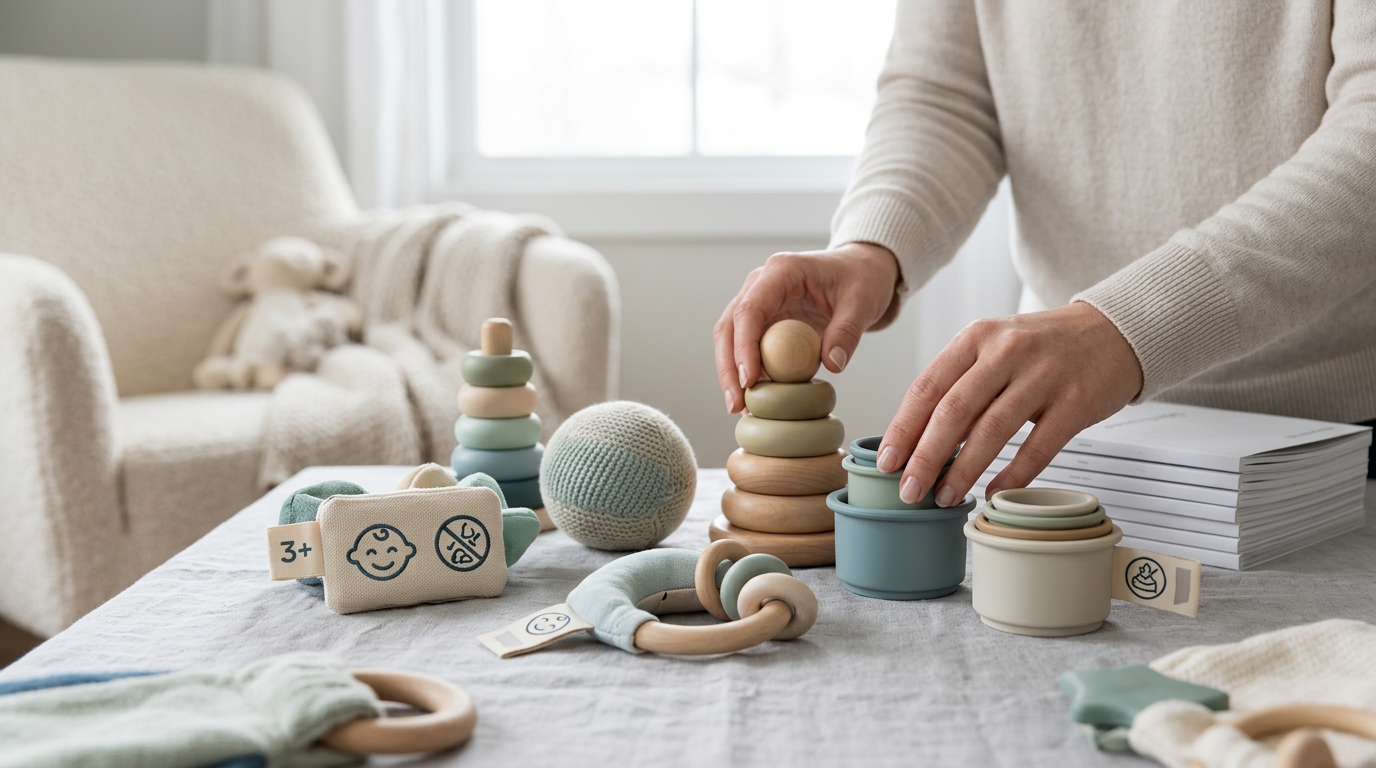
Take a typical silicone teether. The label shows 3+ months, ASTM mark, and “food-grade silicone.”
That combination passes every check. You know it supports mouthing safely and will not add clutter later. Compare that to a similar-looking toy with only “cute and safe” printed on the front. Skip it and keep looking.
Another example is a wooden rattle labeled 6+ months with a clear ASTM stamp. The wood is listed as untreated beech, which fits the safer toy choices many parents prefer for teething stages.
Handle Battery and Magnet Toys with Extra Care
Battery compartments and small magnets need their own scan because they create hidden risks that labels must spell out. Many modern toys include lights or sounds, so this step matters more than it used to.
Check that the battery door needs a screwdriver to open. Magnets should be listed with a clear age floor, usually 3 years or older. If the label only says “keep away from small children” without details, move on.
- Count the magnets shown on the package
- Verify the compartment screws in place
- Look for the exact phrase “button cell battery”
- Confirm the toy carries an updated ASTM mark after 2018
- Note any recall language on the label
Parents who skip this check often discover loose batteries within days. A calm system starts with catching these details before the toy reaches the playroom.
How a Calm System Keeps Play Spaces Tidy
Once you choose safer toys, rotation helps the room stay light. Keep one bin out and rotate the rest every two weeks.
- Monday reset takes ten minutes
- One new toy comes out, one goes back
- Zones by type: floor toys, table toys, quiet toys
Our parent-tested rotation method fits real life and cuts daily cleanup time in half. You end up with cleaner play spaces and happier everyday play because the toys in use actually match the current stage.
Comparison of Label Types
| Label Element | Good Example | Skip Example | Reason to Choose or Skip |
|---|---|---|---|
| Age range | 6–12 months | None listed | Matches skills and size |
| Certification | ASTM F963 | Only “safe for baby” | Meets tested standards |
| Materials | Food-grade silicone | “Non-toxic plastic” | Clear and low-chemical |
| Warnings | Small parts noted clearly | Tiny text, no details | Helps you act fast |
Next Steps for Calmer Play
- Grab one toy you already own and read its label using the checklist above
- Print or save the quick checklist for your next store run
- Try a simple two-bin rotation this week and notice how the room feels
- Download our stage-by-stage guide for even faster decisions every time
- Review one hand-me-down toy label tonight to practice the five-minute scan
Baby toy safety labels explained this way turn shopping into a calm, five-minute task. You end up with safer toy choices, cleaner play spaces, and happier everyday play. Made in Houston by a small family-run studio, our instant download PDFs give you the same parent-tested tools we use at home.
FAQ
How long does it really take to read a toy label?
Most labels take under five minutes once you know the five spots to check. The age range, marks, and warnings sit in the same places on almost every package.
What if the label is missing an age range?
Set the toy aside. Without an age range you cannot match it to your child’s stage, so it fails the first safety filter.
Are all certification marks equal?
ASTM and CPSC marks carry the most weight for US toys. They cover the tests that matter most for choking, chemicals, and durability.
Can I still use hand-me-down toys?
Yes, but read the label again. Older toys may lack current marks or have worn parts that create new hazards.
Where can I find more printable tools?
Our guides include ready-to-print checklists and rotation labels so you can keep the system going without extra work. See the American Academy of Pediatrics toy safety page and the ASTM toy standard overview for extra background.