Safe Bath Toys for Babies: Mold-Free Picks Made Simple
10/14/2026
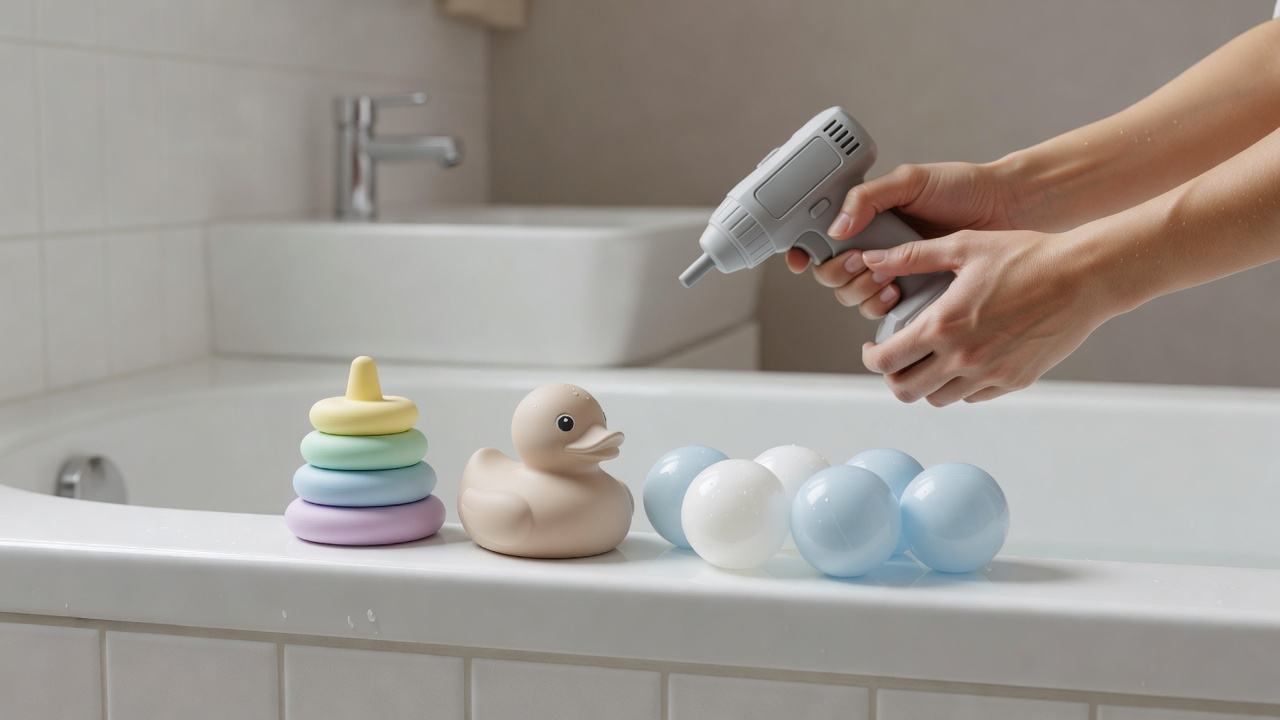
Safe Bath Toys for Babies: Mold-Free Picks Made Simple
You reach for that rubber duck after bath time and notice the black spots inside. Most parents hit this moment and wonder which toys will actually stay clean without extra hassle. Safe bath toys for babies focus on materials that dry fast and skip the hidden nooks where mold grows.
We keep choices simple so you can build water play that feels light instead of stressful.
Key Takeaways
- Choose solid silicone or natural rubber over hollow plastic
- Skip any toy with holes or removable parts that trap water
- Dry toys upright after every use
- Rotate three sets so each gets full air time
- Use a weekly vinegar wipe to stay ahead of buildup
Why Mold Appears in Most Bath Toys
Hollow toys hold water in seams you cannot see. Warm bathroom air speeds growth once moisture stays trapped. Parents often notice the problem only after the toy smells or turns dark inside.
A quick shake test at the store reveals many hidden pockets. If water sloshes, mold will likely follow within weeks. Moisture trapped for even a few days creates the perfect environment, especially in bathrooms without good ventilation. According to EPA guidelines on household mold, controlling moisture is the single most effective step to prevent growth in everyday items like toys.
Materials That Resist Mold Best
Solid pieces dry in minutes instead of days. Here is how common options compare:
| Material | Mold Risk | Drying Time | Easy to Clean? |
|---|---|---|---|
| Solid silicone | Low | 5 minutes | Yes |
| Natural rubber | Low | 10 minutes | Yes |
| Hollow plastic | High | Hours | No |
| Foam inserts | Very high | Days | No |
Pick silicone or rubber first when you shop. They cost a bit more but last longer without the sour smell. Parents who switched report replacing toys half as often because the material simply does not absorb water the same way.
Quick Checks Before You Buy
Run through this short list in the aisle or online cart:
- Solid construction with no holes
- One-piece design only
- Labeled BPA-free and phthalate-free
- Bright colors that do not fade after one wash
- Size big enough for little hands but not so large it blocks the tub drain
These five checks cut most problem toys before they reach your home. Add one more check if the toy feels unusually light for its size, since lightweight hollow pieces almost always trap water.
Simple Cleaning Routine That Works
Do this after every bath:
- Rinse each toy under warm water
- Shake off excess drops
- Set on a rack that lets air reach all sides
- Wipe once a week with a 1:1 vinegar-water mix
Parents who follow the routine notice far fewer replacements. Check the post-illness toy reset guide for full printable labels that keep the steps consistent. A second quick pass with a soft brush on any grooves removes early film before it hardens.
Age-Right Picks by Stage
Newborns need just one or two soft pieces. Six-to-twelve-month babies enjoy stacking cups that double as pour toys. Toddlers like boats with open bottoms so water drains right out.
Match the toy to the stage and you avoid the clutter that leads to forgotten wet pieces. For example, a single silicone whale for a six-month-old can be used for pouring practice, then later for simple floating games once the child sits steadily.
Storage That Keeps Toys Dry
Hang a mesh bag on the shower rod so air moves around every toy. Empty the tub completely after each use. Never leave toys sitting in standing water overnight.
A quick 10-minute reset at the end of the week keeps the system running without extra bins or shelves. Keep the bag at eye level so you remember to hang it every time instead of leaving toys in the tub.
Building a Simple Bath Toy Rotation System
A rotation keeps toys fresh and gives each set time to dry completely between uses. Start with three small groups and swap them weekly.
Here is how to set it up:
- Group A: two stacking cups and one boat
- Group B: one whale and two rings
- Group C: one duck and one small bucket
- Label each group with a sticker so you remember the order
- Store the off-duty groups in a dry cabinet away from the bathroom
- Check every Sunday night and move the next set into the mesh bag
This method spreads wear evenly and cuts the chance that one toy sits wet for days. Many families add a fourth group during summer when baths happen more often.
Common Hazards to Skip
- Any toy that squeaks or has moving parts
- Cheap sets with thin seams that split
- Foam letters that absorb water fast
- Brightly colored plastic with strong chemical smell
Always check the current recall list before bringing new toys home. The CPSC toy safety guide lists recalled items and explains what the ASTM F963 label actually covers. See the PDF guide versus safety workshop comparison for a side-by-side look at which tools help you spot these issues fastest.
How Our Guides Support Better Choices
We write short PDFs that walk you through every stage from 0 to 3 years. Each one includes checklists you print once and reuse for years. Start with the timing guide for new parents if you want the calm system in place before the next bath-time surprise.
Visit Little Baby Toys for the full set of instant downloads written by parents and reviewed with pediatric input.
Conclusion
Pick three solid silicone toys this week, set up the mesh bag, and run the vinegar wipe once. You will notice the difference in both safety and the lighter feel of your bathroom.
Next steps:
- Print the developmental toy labels printable and sort your current bath toys tonight
- Add the mesh bag to your next store run
- Download the first PDF guide to lock in a rotation that actually fits your evenings
- Replace any hollow piece the moment you spot water inside
FAQ
How often should I clean bath toys?
Wipe them with vinegar solution once a week and air-dry after every use. This rhythm prevents most mold before it starts.
Are silicone bath toys worth the extra cost?
Yes. They last two to three times longer than hollow plastic and need fewer replacements, so the yearly spend stays about the same.
Can I save a toy that already has mold?
If the mold sits only on the surface and the toy is solid, a deep vinegar soak may work. Hollow toys with internal spots should be tossed.
What size toys work best for a small tub?
Choose pieces that fit in one hand and stack or nest. Larger items crowd the space and stay wet longer.
Do bath toys need to meet any special safety rules?
Look for the ASTM F963 mark and avoid anything on the CPSC recall list. Solid construction plus that label covers the main risks.