Teething Toys Guide: Calm Bites Without Extra Mess
8/29/2026
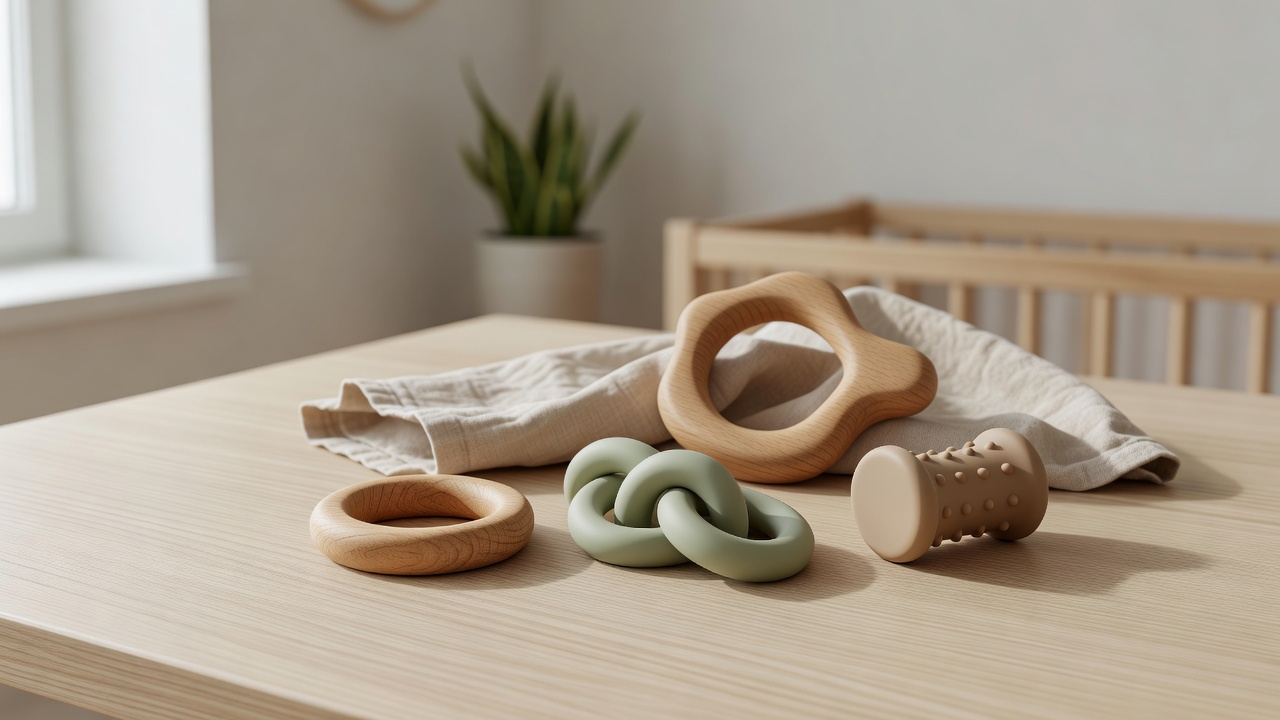
Teething Toys Guide: Calm Bites Without Extra Mess
Parents often face sore gums and scattered toys at the same time. A good teething toys guide helps you choose what actually soothes without turning the floor into a sticky zone.
You want something that works fast, stays clean, and fits the stages your baby is in right now. We focus on simple choices that support calm play every day.
Key Takeaways
- Look for one-piece silicone or natural rubber teethers
- Skip anything with small parts or liquid inside
- Clean in under five minutes with a quick daily routine
- Rotate two or three options to cut clutter
- Match firmness to your baby's current biting strength
Teething Toys Guide Basics
Start by checking the label for age and material. Most babies begin teething around six months, but some show signs earlier. Watch for increased drooling and the urge to chew on everything from fingers to furniture edges. These cues tell you it is time to introduce a dedicated teether rather than random household items.
Focus on textures that massage gums without breaking into pieces. Safer toy choices guide for first-time parents walks through the same label checks we use at home. Pay attention to the recommended age range printed on the package because a teether meant for older babies can be too firm for early gums.
Materials That Stay Calm and Clean
Choose options that wipe down fast. These hold up best:
- Food-grade silicone
- Natural rubber
- Untreated wood
- BPA-free plastic
- Organic cotton wraps
- Smooth silicone beads on a single cord
Avoid anything with fabric covers that trap drool. Those turn into damp sponges within hours and can hide mold if not dried completely each evening.
What to Skip for Teethers
Some teethers add more problems than relief. Skip these common picks:
- Liquid-filled rings that can leak
- Toys with small beads or strings
- Anything labeled for older children
- Multi-piece sets that scatter easily
- Plush versions with loose stuffing
- Teethers with attached clips that pose choking risks
The Consumer Product Safety Commission toy guidelines remind parents to inspect for loose parts before every use. Check secondhand toys for hazards in five steps shows how to spot hidden damage before you bring an item home.
Quick Daily Cleaning Routine
Mess builds when cleaning feels like a chore. Try this five-minute flow instead:
- Rinse under warm water right after use
- Wipe with a mild soap cloth
- Air-dry on a rack
- Check for cracks once a week
- Store in a small basket near the high chair
- Replace any item showing wear immediately
How to clean baby toys in five minutes daily gives the full checklist we follow. The FDA guidance on teething toys also recommends avoiding products with added numbing agents that can mask real discomfort.
Age-Right Teether Picks
Match the firmness to your baby's stage. Softer works for early gums; firmer helps later teeth.
- 0-6 months: Soft silicone rings
- 6-12 months: Textured rubber keys
- 12-18 months: Wooden rings with safe edges
- 18-24 months: Silicone tubes they can hold easily
These keep play focused instead of scattered. Many parents notice their baby returns to the same two favorites once the rotation stays consistent.
Observing Biting Patterns for Better Picks
Pay attention to how your baby uses each teether. Strong biters often prefer thicker silicone while gentle chewers like the give of natural rubber. Keep a simple notebook for one week and note which textures get the most attention during fussy periods.
This habit helps you narrow choices quickly and avoid buying items that sit unused. For example, a baby who chews only the edges may need a ring with raised bumps rather than a smooth tube. Adjust the rotation based on these observations instead of guessing.
Teether Type Comparison
| Type | Pros | Cons | Mess Level |
|---|---|---|---|
| Silicone ring | Easy to clean, flexible | Can feel too soft later | Low |
| Wooden teether | Natural feel, durable | Needs regular drying | Very low |
| Rubber keys | Good grip, textured | Can get sticky if ignored | Medium |
| Liquid-filled | Cooling effect | Risk of leaks | High |
Rotation Method for Less Clutter
Keep only two teethers out at once. Swap one every few days so nothing stays sticky or lost. Store the rest in a labeled bin. This simple swap cuts the daily reset time in half. PDF Guide vs Toy Subscription: Which Cuts Clutter explains why fewer items out beats monthly boxes.
Parents who rotate report calmer mornings because they spend less time hunting for the right toy. A small basket by the changing table works well for quick access during diaper changes when chewing peaks.
Where to Find Parent-Tested Options
We make our guides right here in Houston. Grab the instant download at Little Baby Toys when you want printable checklists that match these steps. The American Academy of Pediatrics teething tips also supports choosing one-piece designs over multi-part toys.
Conclusion
Pick one new teether this week and test the five-minute clean. Track what your baby actually reaches for most often. Small consistent choices add up to calmer days and fewer toy piles.
Next steps:
- Pull out two current teethers and check for damage
- Choose one material from the list above
- Set a phone reminder for the daily wipe
- Print the rotation labels from our guide
- Swap in a new option after three days
- Note biting patterns in a small notebook for one week
FAQ
How long do teething toys usually last?
Most silicone and rubber options hold up six to nine months with daily cleaning. Wood lasts longer if dried fully each time.
Can I use frozen teethers safely?
Yes, but only solid ones. Never freeze liquid-filled versions because they can crack and leak.
What if my baby ignores every teether?
Try different textures and temperatures. Some prefer a parent's clean finger or a chilled washcloth for a few days.
Are wooden teethers safe for drool?
They are when made from untreated hardwood. Wipe and air-dry right after each use to prevent cracks.
How do I know when to replace a teether?
Replace at the first sign of cracks, tears, or sticky spots that won't wash off.