Toy Rotation Method for Toddlers That Cuts Daily Mess
8/29/2026
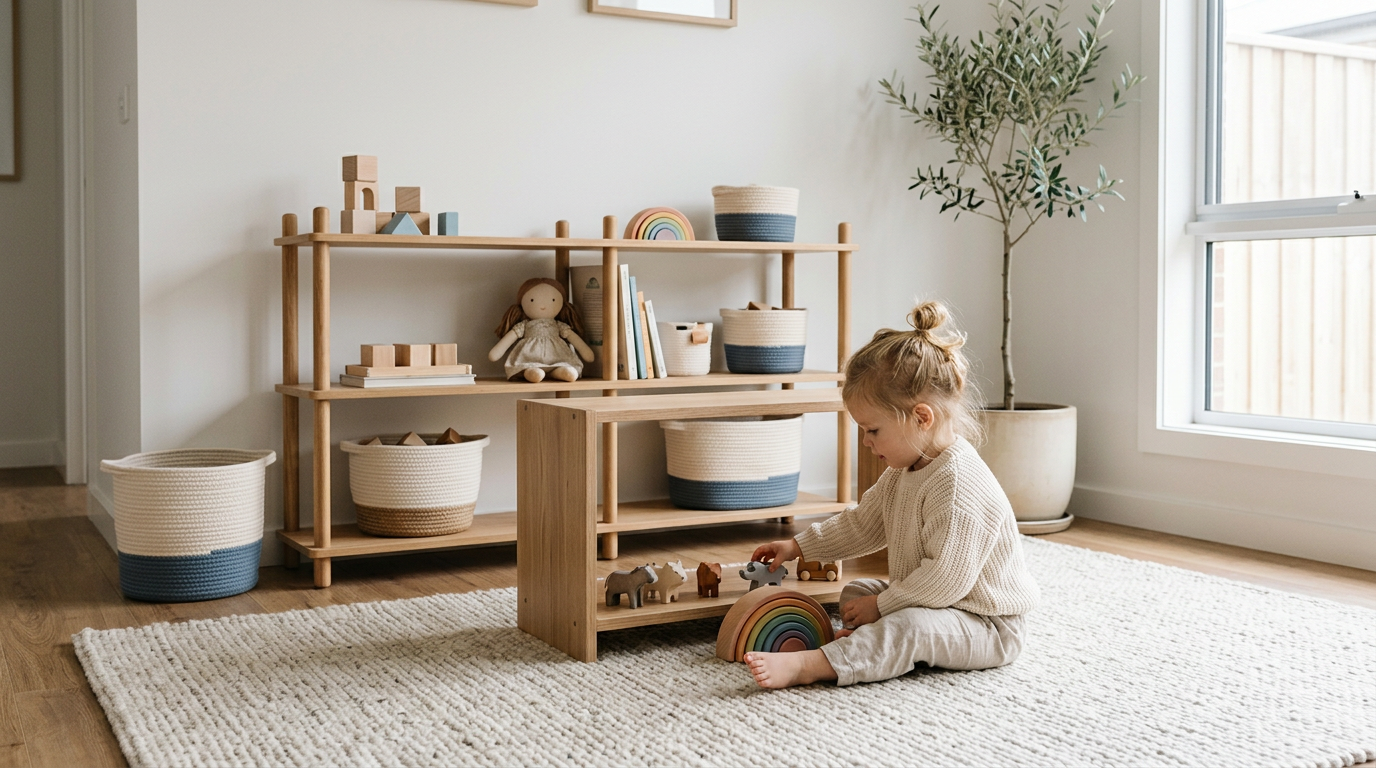
Toy Rotation Method for Toddlers That Cuts Daily Mess
You walk into the playroom and toys cover every inch of floor. Your toddler pulls out three bins at once and leaves them scattered. A toy rotation method for toddlers changes that pattern without buying a single new item.
Parents often notice the floor stays clearer when only a small set stays visible. The rest waits its turn in storage. This approach supports calmer play spaces and gives each toy more attention.
Key takeaways
- Start with what you already own
- Limit daily choices to three or four bins
- Reset once a week in ten minutes
- Track what actually gets used
Why a Toy Rotation Method for Toddlers Works
Toddlers focus better with fewer options in front of them. When twenty toys sit out, attention scatters. When six toys sit out, play lasts longer and feels more purposeful.
A rotation also keeps toys feeling fresh. The same blocks or cars spark new ideas after a week in the closet. You spend less time picking up and more time enjoying the moment with your child.
- Less visual noise in the room
- Toys stay in better shape longer
- Easier to spot broken pieces right away
- Quicker cleanup at bedtime
- More room for open-ended play on the floor
- Lower chance of toys getting lost under furniture
Gather What You Already Own
Walk through the house and collect every toy your toddler uses. Do not buy storage yet. Just pile everything in one spot so you see the real volume and avoid duplicate purchases later.
Sort by type first. Group soft toys, building sets, vehicles, and books. This step shows you what you actually have instead of guessing and helps you notice which categories dominate the mess.
- Soft toys and dolls
- Blocks and stacking items
- Cars and small vehicles
- Puzzles and shape sorters
- Books and quiet play
- Pretend kitchen items
- Art supplies in small sets
- Musical toys that stay contained
Sort Into Rotation Bins
Choose three or four bins for current play. Pack the rest into clear bins labeled by month or theme. Store them on a high shelf or in a closet so they stay out of daily sight.
Label each active bin with the date it goes out. Rotate one bin every seven to ten days. Your toddler sees new toys without extra purchases and learns to value what is available right now.
- Bin A: blocks and cars
- Bin B: books and puzzles
- Bin C: soft toys and dolls
- Bin D: pretend play items
Set Up Simple Zones in the Room
Divide the play area into three small zones. One zone holds the current bins. One holds a mat for floor play. One holds a low shelf for books. This layout keeps everything reachable yet contained.
Keep each zone under four feet wide. Toddlers can reach everything without climbing. You can see the whole space at a glance and step in quickly if play gets too wild.
| Zone | What Goes Here | Why It Helps |
|---|---|---|
| Active bins | Three rotation bins | Limits choices to prevent overwhelm |
| Floor mat | One open-ended toy | Easy cleanup and focused play |
| Low shelf | Five books max | Quick resets and independent choices |
Use Printable Rotation Labels
Print simple labels that list the bin number and the week it stays out. Tape them to the front of each bin. When the week ends, swap the label with the next bin so the system runs on autopilot.
These labels turn the system into a habit instead of a guess. You can download free printable rotation labels from trusted parent resources and adapt them to your bins for consistent weekly swaps.
- Week 1 label on bin A
- Week 2 label on bin B
- Week 3 label on bin C
- Week 4 label on bin D
- Extra blank labels for seasonal swaps
Run a Ten-Minute Weekly Reset
Pick one evening each week. Put away anything that wandered out of its zone. Swap one bin if needed. Wipe the low shelf and straighten the mat so the space feels lighter again.
The reset stays short because the system already limits what is out. You finish before the kettle boils and avoid weekend marathons of toy sorting.
- Walk the room once
- Return stray toys to their bin
- Swap one rotation bin
- Straighten the shelf
- Check for broken pieces to set aside
- Note any bin that needs restocking
What to Skip in Your Rotation
Some items do not rotate well. Large ride-on toys and heavy play kitchens stay in place because they anchor the room. Safety items like outlet covers stay fixed too.
Skip anything with small parts that scatter easily until your toddler shows steady focus. Those pieces add to the daily mess instead of cutting it and often end up under the couch.
- Large ride-ons
- Wall-mounted activity boards
- Crib toys that stay in the crib
- Items with 50-plus tiny pieces
- Fragile collectibles
Track What Gets Used
Keep a small notebook or phone note. Write the date a bin comes out and which toys your toddler reaches for first. After four weeks you see clear patterns that guide future swaps.
Some toys never leave the bin. Those move to a giveaway pile. The favorites stay in more frequent rotation. This step keeps the system honest and personal so you are not rotating items no one plays with.
Deal With Everyday Challenges in Rotation
Even a good system hits bumps. Your toddler may protest when a favorite toy rotates out or you may run out of space for the stored bins. Address these early so the habit sticks.
Start by offering a clear trade: the current bin stays out until the new one arrives. Most children adapt once they see the pattern repeats every week. If space is tight, stack bins two high in a closet and label the sides instead of the fronts.
- Offer a two-minute warning before a swap
- Let your toddler help move one bin
- Keep one "always out" comfort toy separate
- Use a timer during the first few resets
- Review the tracking sheet monthly for tweaks
Next Steps
- Print your first set of rotation labels tonight
- Sort toys into four bins this weekend
- Pick your reset evening and mark it on the calendar
- Check one authoritative source on toddler play for extra ideas: American Academy of Pediatrics, Consumer Product Safety Commission toy pages, Zero to Three developmental play guides
FAQ
How many toys should stay out at once?
Three or four bins work for most toddlers. That usually equals eight to twelve individual toys and keeps the floor clear.
Can I rotate books the same way?
Yes. Keep five books on the shelf and rotate the rest every two weeks so reading stays fresh without extra clutter.
What if my toddler asks for a toy in storage?
Tell them it returns next week. Most children accept the answer once the pattern feels steady and predictable.
Do I need special storage bins?
Clear bins with lids work best because you can see contents without opening every one and they stack neatly.
How long does the full system take to set up?
Most parents finish the first sort and labeling in one evening and see calmer spaces by the end of the first week.