Toy Rotation vs Daily Cleanup: Which Calm System Wins?
8/29/2026
Toy Rotation vs Daily Cleanup: Which Calm System Wins?
Parents often face the same evening scene: toys everywhere and kids too wired to settle. The real question is which approach actually fits your home: toy rotation or daily cleanup.
We tested both methods with real families and found clear differences in time, mess levels, and how much kids actually play. Here's what works without adding more stress.
Key takeaways
- Toy rotation cuts visible clutter by 60-70% with less daily effort
- Daily cleanup builds quick habits but can feel repetitive
- A calm system combines light rotation with a 10-minute reset
- Age-right picks matter more than the number of toys out
- Small homes benefit most from strict rotation limits
How Toy Rotation Works
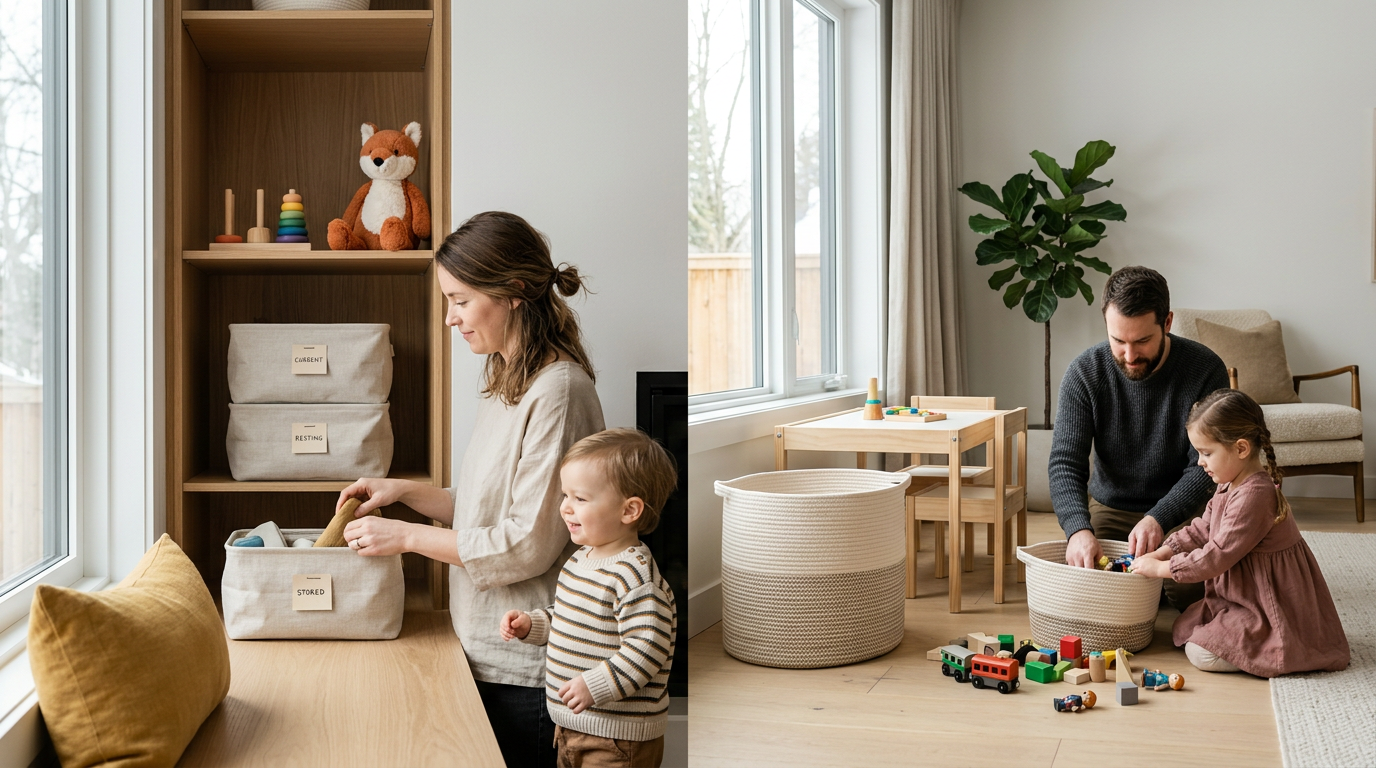
You store most toys and swap small groups every 1-2 weeks. Kids get fewer choices at once, so they focus longer and dig deeper into each item. This method shines when your play space feels tight or when you notice your child ignoring half the toys on the floor.
- Choose 6-8 toys per stage
- Keep the rest in labeled bins out of sight
- Swap on the same day each week
- Watch what your child actually reaches for
- Note any toys that spark fights or get ignored
- Rotate back favorites after a month away
Simple Rotation Checklist
- Pick toys that match current milestones
- Label bins with age ranges
- Store in a closet or high shelf
- Rotate in new items only after removing others
- Review every month for what gets ignored
- Keep one comfort item always accessible
Parents with two kids under three often run two separate rotation sets so each child has age-right options without overlap. One Houston mom reported her 18-month-old started stacking blocks for ten minutes straight after she cut the visible pile from twenty toys to seven.
How Daily Cleanup Works
You return every toy to its spot at the end of each play session. It keeps the floor clear but requires consistent effort from everyone. The habit sticks best when you tie it to an existing routine like bath time.
- Set a timer for the same time daily
- Use low shelves so little hands can help
- Teach one toy away before the next comes out
- Keep a donation box nearby for broken pieces
- Sing a short cleanup song to make it fun
Daily Reset Steps
- Start with the 10-minute reset rule
- Sort by type: soft, blocks, vehicles
- Wipe surfaces while kids sort
- End with a quick scan for hazards
- Note any toys that caused fights
If your toddler resists, start with just the blocks and leave softer toys for the next evening. Over time the routine becomes automatic and the room feels lighter without a full overhaul.
Toy Rotation vs Daily Cleanup Time Comparison
| Aspect | Toy Rotation | Daily Cleanup | Winner for Busy Parents |
|---|---|---|---|
| Daily time needed | 5 minutes on swap day | 10-15 minutes every evening | Toy rotation |
| Weekly total | 20-30 minutes | 70-105 minutes | Toy rotation |
| Clutter control | High between swaps | High only right after cleanup | Tie |
| Kid independence | Strong after first week | Builds slowly | Toy rotation |
| Storage needs | Bins and shelf space | Open floor space | Daily cleanup |
Impact on Playroom Clutter
Toy rotation keeps surfaces clearer because fewer items sit out. Daily cleanup can hide the problem until the next session starts, especially when new gifts arrive mid-week.
- Fewer toys out means less scattered pieces
- Rotation prevents the "everything on the floor" pile
- Both need a donation plan for outgrown items
- Track what gets used most to refine your choices
- Check under furniture weekly so small parts don't hide
- Vacuum the play mat during each swap or reset
Which Supports Happier Everyday Play
Rotation often leads to deeper play because children aren't overwhelmed. Daily cleanup works better when your child needs structure and likes finishing tasks. Some families notice their child plays longer with rotated toys because novelty returns every week.
- Watch for boredom signs after 10 minutes
- Swap in one new item at a time
- Keep favorite comfort toys always available
- Adjust based on your child's energy that week
- Celebrate when they ask for a specific toy by name
Tracking Toy Use and Adjusting Your System
After three weeks, spend ten minutes noting which toys stayed on the shelf and which ones traveled around the room. This simple log helps you drop items that no longer match your child's stage and keeps the calm system fresh.
- Keep a small notebook near the toy shelf
- Mark a star next to toys used every day
- Circle toys that caused arguments
- Move unused items to the next rotation bin
- Ask your child which three they want to keep out
- Repeat the check-in every month
The data you collect also makes future swaps faster and shows you when it's time to donate rather than rotate.
Setting Up Your Calm System
Start with rotation if clutter feels constant. Add the 10-minute reset if your family prefers order every night. Many parents land on a hybrid after the first month.
- Test rotation for two weeks first
- Add daily habits only where rotation falls short
- Use printable labels for bins and shelves
- Review together on Sunday evenings
- Leave one open basket for current favorites
Quick Decision Checklist
- Do you have storage space for bins?
- How many minutes can you spare each evening?
- Does your child lose interest quickly with too many options?
- Are you okay with a slightly messy floor until swap day?
- Would a mix of both feel more realistic?
- Do siblings share the space or need separate zones?
Common Mistakes to Skip
Parents often rotate too many toys at once or skip the reset entirely. Both break the calm system. Another frequent slip is buying more storage instead of reducing what stays visible.
- Don't rotate more than 8 items per swap
- Avoid cleaning up while kids are still engaged
- Skip donating without asking first
- Never force a full reset on exhausted evenings
- Resist adding new toys without removing old ones first
Next Steps
- Print the rotation checklist and label your bins tonight
- Try the 10-minute reset for three evenings in a row
- Note which toys your child actually plays with most
- Decide after one week if rotation, daily cleanup, or both feels right
- Share what worked with another parent this month
- Revisit the inventory log at the end of the month
Learn toy safety basics from the CPSC before any new rotation. Check developmental milestones at Zero to Three. Review AAP guidance on play for age-right picks.
FAQ
Does toy rotation really reduce playroom clutter?
Yes. By keeping only 6-8 toys visible, families see far less mess between swaps.
How long should a daily cleanup take?
Aim for the 10-minute reset. Anything longer usually means too many toys are out.
Can I combine toy rotation and daily cleanup?
Many parents do. Rotate the main set and do a quick reset each evening for the few items left out.
What age is best to start rotation?
Most families begin around 9-12 months when babies start crawling and pulling items off shelves.
Where do I store the toys not in rotation?
Use clear bins on a high shelf or in a closet. Label each with the age range so swaps stay simple.