PDF Guide for Siblings 0-3: One Guide Without Overlap
8/29/2026
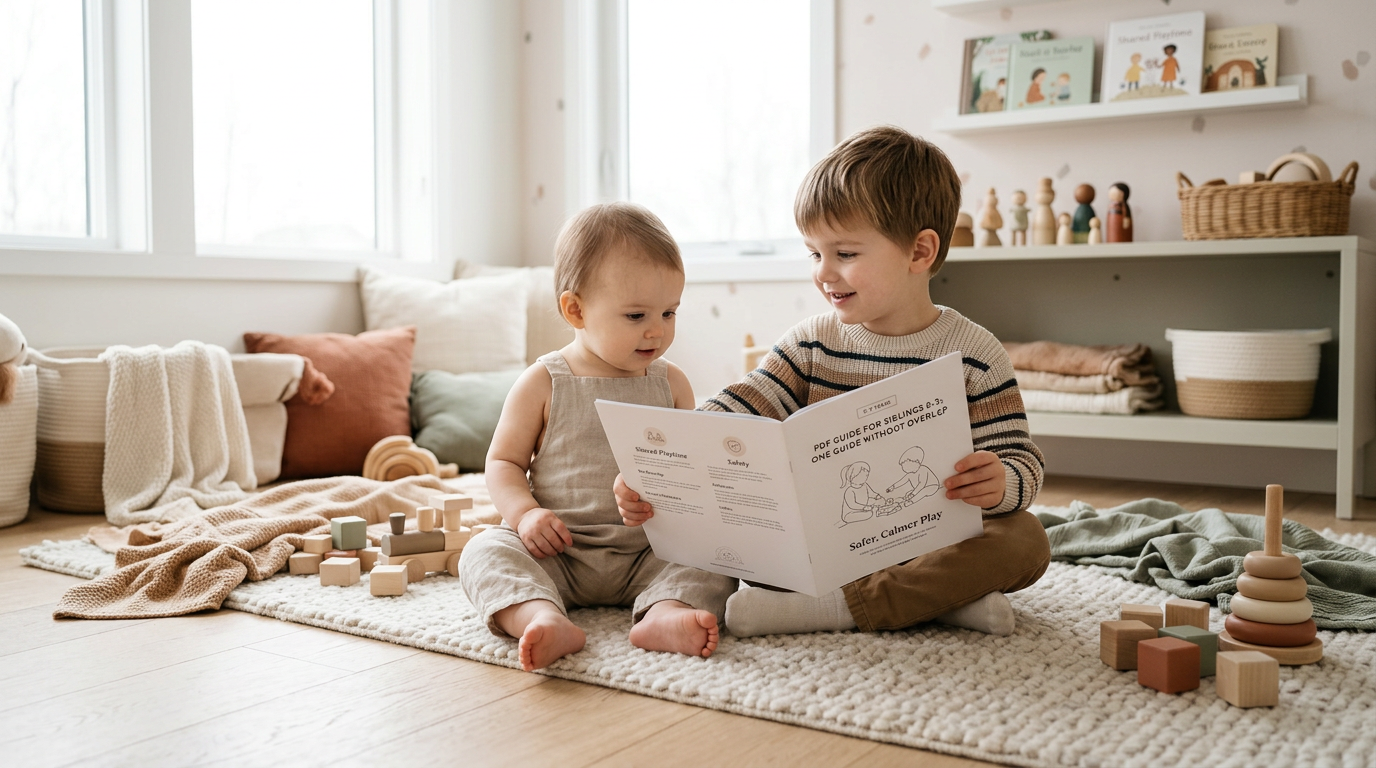
PDF Guide for Siblings 0-3: One Guide Without Overlap
You have two kids under three and the toy pile keeps growing. A single pdf guide for siblings 0-3 can replace three separate booklets and still give each child what they need right now.
Key takeaways
- One guide covers birth to three without repeating stages
- Built-in rotation keeps the play space calm for both kids
- Printable checklists let you check safety in under ten minutes
Why One Guide Works for Mixed Ages
Separate guides often repeat the same safety rules and leave gaps between ages. A unified pdf guide for siblings 0-3 lists each milestone once and shows how older toys can stay out of reach until the younger child is ready.
Parents tell us the overlap disappears when the guide groups items by skill instead of by birthday. You open one file and see exactly which toys move forward and which stay packed away. This approach cuts decision fatigue because you no longer flip between multiple files when both children want to play at the same time.
What the Guide Covers Stage by Stage
The layout breaks the first three years into four clear windows. Each window lists three to five toys that actually match the skills at that time.
- 0-6 months: high-contrast rattles and soft books
- 7-12 months: cause-and-effect toys and safe crawlers
- 13-24 months: stacking and simple pretend play
- 25-36 months: fine-motor tools and early puzzles
You print the four pages and tape them inside the toy cabinet so everyone in the house knows the current rotation. The guide also ties each window to the CDC developmental milestones chart so you can cross-check real progress without guessing. For example, a six-month-old who starts reaching needs graspable items while the two-year-old practices dropping objects into containers.
How the Toy-Rotation Method Keeps Peace
A good pdf guide for siblings 0-3 includes a weekly rotation chart. You move three bins on Sunday night and both children still have fresh options.
- Pull the oldest toys from the active set
- Add two new items that match the next skill window
- Store the rest out of sight
- Wipe surfaces and check for loose parts
The whole reset takes ten minutes once you have the checklist in front of you. Families who follow this method report fewer fights because each child sees toys that fit their current abilities instead of fighting over items that are too advanced or too simple.
Common Mistakes With Sibling Toy Sharing
Even with a solid guide, parents slip into patterns that create overlap. Spot these early and adjust before the play space fills again.
- Buying duplicates of the same toy for each child
- Leaving all toys out instead of rotating weekly
- Ignoring the younger child's reach when older items sit low
- Skipping the safety scan on shared pieces
- Mixing fine-motor tools with mouthing toys in one bin
- Forgetting to update the rotation chart after a birthday
Fixing just two of these habits often cuts visible clutter by half within a month.
Safer Toy Choices Built Into Every Page
Check secondhand toys for hazards in five steps before anything enters the play space. The guide repeats the same five checks on its printable label so you never skip them. Follow the CPSC toy safety guidelines for parents and look for ASTM and CPSC marks, smooth edges, and no small parts that fit through a toilet-paper roll. The guide lists exactly which materials to skip at each stage.
Printable Checklists That Replace Guesswork
Every section ends with a one-page checklist you can laminate. The lists cover:
- Daily safety scan
- Weekly bin rotation
- Monthly deep clean
- Quarterly growth check
- Emergency toy recall note
You hang the daily scan near the play mat and the rotation list on the cabinet door. These quick scans turn safety into a habit instead of a separate chore you dread.
Comparison: Single Guide vs Separate Age Guides
| Feature | One Sibling Guide | Three Separate Guides |
|---|---|---|
| Overlap between ages | None | High |
| Storage space | One PDF file | Multiple printouts |
| Rotation updates | One chart | Three charts to sync |
| Cost | One purchase | Three purchases |
| Time to read | One evening | Multiple evenings |
The single guide wins on every row when you have kids close in age. It also saves shelf space and keeps your evening reading time short.
Which PDF Fits Your Family Right Now
Which PDF play guide fits your family right now walks through a five-question quiz. Answer once and the result points you to the sibling edition instead of age-specific files.
If your oldest just turned two and the baby is six months, the sibling guide already includes both windows without extra pages. The quiz takes two minutes and removes the guesswork about which file to buy.
Toys That Grow With Both Children
Toys that grow with child picks that last through age 3 shows which items stay useful for three years. A set of soft blocks, for example, works for mouthing, stacking, and early pretend play.
The guide marks these evergreen toys with a star so you buy fewer pieces overall. Trade-offs appear clearly: one versatile toy often replaces two single-use items and still supports both children's stages at once.
Weekly Playroom Reset Checklist for 10-Minute Calm
Weekly playroom reset checklist for 10-minute calm pairs perfectly with the sibling guide. Print both and tape them side by side.
Follow the checklist in order and the room stays usable even when both kids are home all day. The ten-minute limit fits real evenings when dinner needs cooking and bedtime routines loom.
Next Steps
- Download the sibling edition from Little Baby Toys
- Print the four stage pages and the rotation chart tonight
- Run the five-step safety check on everything already on the floor
- Start the first Sunday reset this weekend
One file, two kids, calmer play every day.
FAQ
Does one pdf guide for siblings 0-3 really replace three separate ones?
Yes. The guide lists each skill window once and shows how to rotate items so nothing overlaps.
How many toys should stay out at once for two children?
Most families keep eight to ten items visible. The rotation chart in the guide keeps that number steady.
Can I use the checklists with secondhand toys?
The safety checklist works on new and used pieces. Run the five checks before anything joins the active set.
What if my kids are exactly the same age?
The guide still helps. It groups toys by skill level so you can offer two versions of the same activity without buying duplicates.
Where do the guides come from?
Little Baby Toys is a small family studio in Houston. Every guide is parent-tested and reviewed with pediatric input before release.