9 Month Play Station Setup Without Extra Bins
8/29/2026
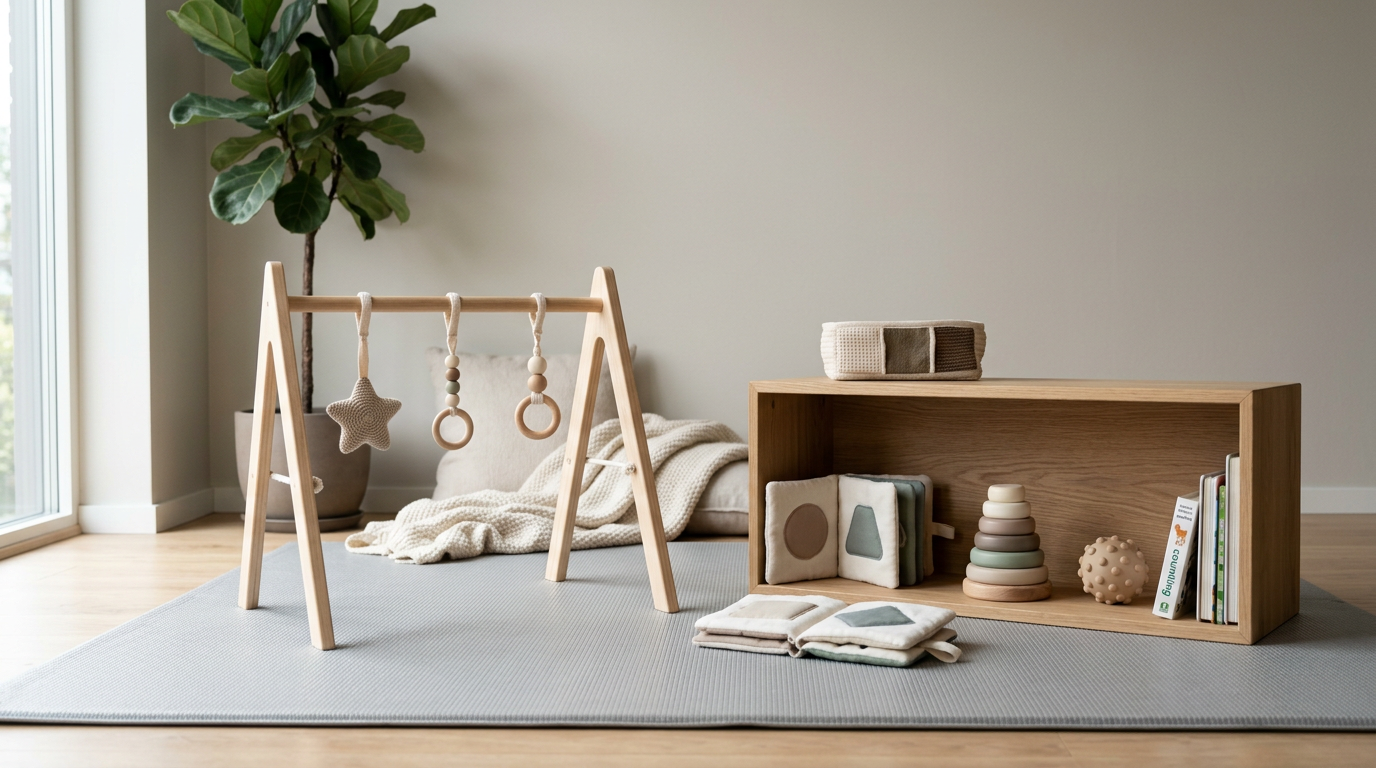
9 Month Play Station Setup Without Extra Bins
You want a spot where your nine-month-old can explore safely while the rest of the room stays clear. The good news is you can pull this together with toys and space you already have.
No new bins required. Just a little planning and the right rotation rhythm.
Key takeaways
- Focus on three small zones instead of one big pile
- Choose six to eight age right toys for 9 months total
- Print simple labels so everyone knows where things live
- Reset in under ten minutes each evening
Pick a Quiet Corner That Already Exists
Look for a spot near the living room or kitchen where you spend most of your day. A 4-by-4-foot patch of floor works fine. Clear the area once, then keep it that way.
Place a soft blanket or play mat you already own. Add a low shelf or basket from another room if needed. The goal is one contained station, not a whole new playroom. Parents who try this often notice the rest of the house feels less scattered after just a few days.
Gather Toys You Already Own
Walk through the house and pull out items your baby reaches for most. You probably have enough already.
- Soft blocks or stacking cups
- A few board books with bright pictures
- One or two rattles that fit small hands
- A soft ball for rolling back and forth
- A wooden ring or teether
- A mirror that stands safely on its own
Keep the total under eight pieces. That keeps the space calm and makes cleanup quick. If you find an extra item you love, store it for the next rotation instead of adding it right away.
Choose Age Right Toys for 9 Months
At this stage babies practice sitting, reaching, and early crawling. Toys should support those moves without extra parts. Age right toys for 9 months focus on grasp, cause-and-effect, and gentle movement rather than lights or sounds that can overwhelm.
How wooden toys for baby grip build strength safely shows why simple wooden pieces often win here. Skip anything with small detachable parts or long strings. The CDC developmental milestones page lists the exact skills most nine-month-olds work on so you can match toys without guesswork.
Set Up Three Small Zones
Divide the small space into three clear areas. This helps your baby know what to do next and keeps everything from mixing together.
- Sitting and reaching zone on the mat
- Rolling and crawling path along one edge
- Quiet book and mirror corner
Each zone holds only two or three toys at a time. When your baby loses interest, swap in the next set from your rotation box. Many families add a fourth spot later for tummy time if crawling starts early.
Print Play Labels for Quick Resets
Labels turn guesswork into habit. Print simple picture cards that show where each toy belongs.
- One label per zone
- Large clear icons your toddler will recognize later
- Laminate or tape them down so they last
A printable play labels set keeps the station tidy even when grandparents visit. You can grab an instant download guide from our studio that includes these exact cards. The labels also help older siblings understand the system without constant reminders.
Rotate Weekly With a Simple Method
A toy rotation method for toddlers that cuts daily mess works at nine months too. Store the rest of the toys in a closet or high shelf. Swap two items every Sunday night.
This keeps interest high without adding more stuff to the floor. Most families notice the play space feels lighter after two weeks of steady rotation. Compare the two main approaches in Toy Rotation vs Daily Cleanup: Which Calm System Wins? to see which rhythm fits your household best.
Weekly Playroom Reset Checklist for 10-Minute Calm gives you the exact steps we use at home.
Match Daily Play to 9-Month Milestones
Nine-month-olds often show bursts of new skills in one week and plateaus the next. Watch for these patterns and adjust the station gently.
- Offer a soft ball during rolling practice to build arm strength
- Place the mirror at eye level when baby sits supported
- Use stacking cups for early pincer grasp work
- Keep one book open to encourage page turning attempts
Track progress with a quick note on your phone each Friday. If a toy no longer holds attention for more than two minutes, swap it out even if the week is not over. This small habit prevents the station from feeling stale.
Run a Fast Safety Check Each Morning
Before the first play session, glance at the station for these quick checks.
- All toys still in good shape with no cracks
- No small pieces that could come loose
- Mat stays flat and non-slip
- Nothing within reach of outlets or cords
Baby toy safety labels explained in five minutes walks through the common marks you see on toys and what they actually mean for daily use. For official guidance on toy standards, see the CPSC toy safety page. The American Academy of Pediatrics toy safety tips also list age-specific reminders that match what we cover in our parent-tested guides.
Compare Station Styles
| Style | Toys Out | Daily Reset Time | Best For |
|---|---|---|---|
| Full room spread | 20+ | 20-30 minutes | Families with big playrooms |
| One bin system | 12-15 | 10-15 minutes | Small apartments |
| Three-zone station | 6-8 | 5-10 minutes | Busy parents wanting calm |
The three-zone version wins for most nine-month-olds because it matches their short attention span and your limited time.
Your Next Step for Calmer Play Spaces
Start tonight with the corner you picked and the six toys you already own. Print the labels, set the three zones, and try the first rotation on Sunday.
- Download the instant guide that includes the printable play labels
- Link the station to your existing evening routine
- Check back in two weeks and adjust the toy list
- Note which zone your baby uses most and expand it slightly
- Share the setup photo with a friend who needs calmer play spaces too
You will notice the floor stays clearer and your baby stays engaged longer. That is the real win with a 9 month play station setup.
FAQ
What toys work best for a nine-month-old station?
Soft blocks, board books, a mirror, and one or two wooden teethers keep things simple and support sitting and reaching skills.
Do I really need no extra bins?
Yes. Use a closet shelf or basket you already own to store the rotation toys. The station itself stays bin-free.
How often should I rotate the toys?
Once a week works well. Swap two items on the same night each week so the change becomes part of your routine.
Can older siblings use the same space?
Keep the station just for the baby. Older kids can play nearby but the three zones stay small and low to the ground.
Where can I find the printable labels?
Our instant download guide includes the exact set we use, along with a one-page checklist for the weekly reset.