Evening Wind Down Toys for Toddlers That Keep Play Gentle
9/16/2026
Evening Wind Down Toys for Toddlers That Keep Play Gentle
You know the scene. Bath time ends and the house should quiet down, yet your toddler spots the toy pile and starts a new game. Evening wind down toys for toddlers can change that pattern when you pick the right ones and set them up with intention.
Parents often reach for whatever is handy, but a few calm choices make the shift to sleep easier. We focus on low mess activities that match tired bodies and minds at the end of the day. Research from the American Academy of Pediatrics on choosing safe toys shows that simple, age-right items reduce overstimulation and support smoother transitions.
Key takeaways
- Pick toys that invite slow movement and quiet focus
- Keep the setup simple so resets take under ten minutes
- Rotate a small group of items instead of offering everything at once
- Use labels and zones to signal that play is winding down
Build a Quiet Corner Setup That Signals Rest
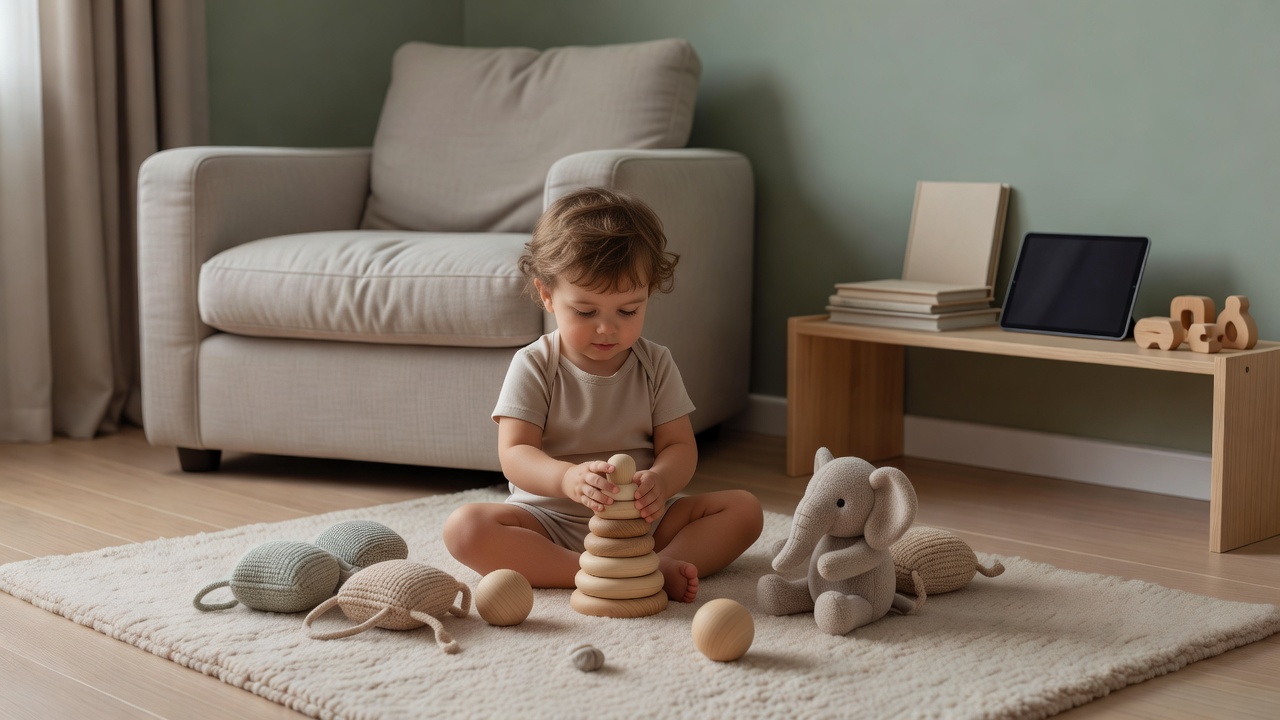
A dedicated spot tells your child play is slowing. Place a low shelf or basket in one corner of the living room or bedroom. Add soft lighting and a small rug so the area feels separate from active zones. This setup works because it creates a visual boundary that helps toddlers recognize when energy should drop.
Keep only three or four evening wind down toys for toddlers in that space. Remove anything with bright lights or loud sounds. The goal is a visual cue that says the day is easing off. Many parents notice that children settle faster when the corner stays consistent night after night.
- Soft stacking rings in muted colors
- A board book with simple pictures
- One wooden puzzle with large pieces
- A set of fabric blocks for gentle stacking
- One plush animal for quiet cuddling
- A small set of nesting cups that fit together slowly
Choose Low Energy Toys That Match Tired Toddlers
After daycare or a busy afternoon, most children need activities that lower heart rate rather than raise it. Evening wind down toys for toddlers work best when they invite sitting or slow movement on the floor. Tired toddlers respond better to items that require minimal physical effort and no sudden noises.
Look for items that support fine motor skills without excitement. Skip anything that encourages running or throwing. A calm corner setup with the right picks helps the transition feel natural instead of forced. Parents report that switching to these options cuts bedtime resistance by half within a week.
- Wooden shape sorters with few pieces
- Soft dolls or animals for quiet holding
- Simple lacing cards made from cardstock
- Texture balls that roll slowly
- Large knobbed puzzles with three or four shapes
- A single soft scarf for gentle waving or folding
Match Evening Toys to Your Toddler’s Age and Stage
Toddlers between 12 and 24 months often enjoy cause-and-effect toys that move slowly, while 2-year-olds may prefer items that let them practice simple sorting. Matching the toy to the stage prevents frustration that can spike energy right before bed.
Start by checking the labels on your current collection. Choose pieces that align with current milestones rather than pushing ahead to more advanced options. This approach keeps play focused and calm without adding new purchases.
- For 12-18 months: large soft blocks and one texture book
- For 18-24 months: two-piece wooden puzzles and nesting cups
- For 24-36 months: lacing cards and a small fabric doll
- Rotate based on observed interest, not calendar age alone
- Watch for signs of boredom and swap one item at a time
Follow a Parent Tested Routine for the Last Hour
Consistency helps little ones know what comes next. Start the wind-down window about sixty minutes before bedtime. Dim lights, offer a snack if needed, then move to the quiet corner. The sequence itself becomes a signal that helps the body prepare for sleep.
Use the same sequence each evening so the routine itself becomes soothing. Many families finish the day with one book and one gentle toy before pajamas. According to guidance from the Centers for Disease Control and Prevention on toddler development, predictable evening patterns support better rest.
- Clear the main play area in two minutes
- Move two evening wind down toys for toddlers to the quiet corner
- Sit together for five minutes of shared play
- Read one short book
- Begin the bedtime steps
- Offer a final drink of water if needed
- Turn off remaining lights in the play zone
Compare Toy Types for Evening Calm
Not every toy supports the same energy level. A quick side-by-side look helps you decide what stays in the evening basket.
| Toy Type | Energy Level | Mess Potential | Best For |
|---|---|---|---|
| Wooden puzzle | Low | None | Focus and fine motor |
| Soft blocks | Low | Low | Gentle stacking |
| Musical toy | High | None | Skip after dinner |
| Fabric book | Low | None | Quiet holding |
| Light-up gadget | Medium | None | Avoid in wind-down |
| Texture scarf | Low | None | Slow movement practice |
Use a Toy Inventory List to Keep Choices Fresh
A short list prevents the corner from filling up again. Spend ten minutes once a month noting which items still work and which ones feel too stimulating. Swap in a new low energy option only when an old one loses interest.
This simple habit keeps the space calm without extra spending. You can update your toy inventory list you can update in ten minutes and print it for quick reference.
Introduce New Toys Slowly to Avoid Overstimulation
One new item at a time keeps the evening feel steady. Place it in the quiet corner for a few nights and watch how your child uses it. If energy rises instead of drops, move it to daytime rotation.
Parents who introduce new toys slowly to keep play focused report fewer bedtime battles. The same rule applies to evening wind down toys for toddlers. Slow introduction also lets you observe safety details like small parts before they become part of the nightly setup.
Reset the Space in Five Minutes Each Morning
A quick tidy after breakfast prevents clutter from creeping back. Return the evening items to their basket and check the floor for stray pieces. This small step keeps the quiet corner ready for the next night.
Many families pair the reset with toy zone labels printable for daily neat play so every item has a clear home. A consistent morning reset also gives you a moment to notice which toys need cleaning or repair.
Keep Play Low Mess With Simple Rules
- No food near the quiet corner
- One toy out at a time
- Return each piece before choosing another
- Store louder toys in a different room after dinner
- Use a small tray to contain loose parts
- Wipe soft toys weekly with a damp cloth
- Check for loose strings or small parts monthly
Next Steps
- Pick three evening wind down toys for toddlers from your current collection tonight
- Set up the quiet corner before dinner tomorrow
- Print a simple zone label and place it on the basket
- Track which toys your child reaches for most often this week
- Adjust the list after seven days and keep only what truly calms
- Review the corner setup once a month for safety updates
FAQ
What makes a toy good for evening wind down?
Look for quiet, low-energy options that invite sitting or slow hand work. Soft textures and muted colors help more than bright lights or sounds.
How many toys should stay in the evening corner?
Three to four items work well. Too many choices keep energy high instead of letting it drop.
Can I use the same toys every night?
Yes. Repetition builds the routine. Swap one item every few weeks if interest fades.
Where can I find parent-tested evening routines?
Our low energy toys for toddlers after daycare calm picks guide shares real family schedules and simple resets.
Do printable labels really help?
They do. Clear zones tell children where toys belong and make the five-minute reset feel automatic.