First Crawling Toys 6-9 Months: Simple Setup Guide
8/29/2026
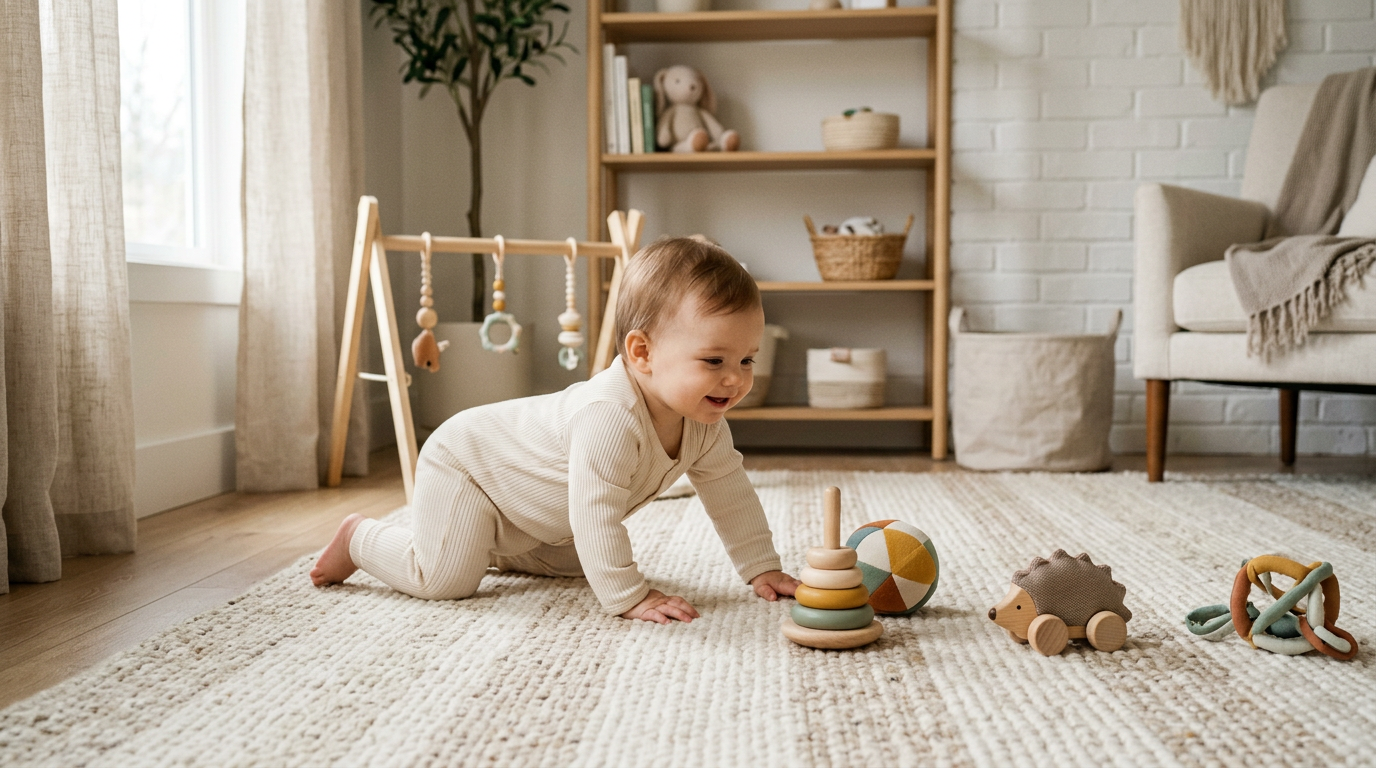
First Crawling Toys 6-9 Months: Simple Setup Guide
You just noticed your baby starting to rock on hands and knees. That stage calls for toys that invite movement without filling the floor with clutter.
Key takeaways
- Focus on low, stable toys that encourage reaching and scooting
- Keep the space minimal so your baby can practice freely
- Use printable toy labels to stay organized from day one
Why Crawling Matters Right Now
Crawling builds core strength and hand-eye coordination. It also helps babies explore cause and effect through simple play. Many parents notice their little one first attempts to move when a favorite item sits just out of reach.
Parents often ask what actually supports this skill. The answer is toys that stay put when pushed and roll slowly when batted. These choices let your baby focus on the motion instead of frustration from toys that roll away too fast.
See our guide on 9 month play station setup without extra bins for a full zone plan that works at this age.
A few real-life examples show the difference. One family placed a soft cube two feet away and watched their six-month-old spend ten minutes scooting forward. Another parent used a wooden rattle on its side so it would not spin wildly. Both setups kept the play corner calm and the baby engaged longer.
Choosing Age Right Picks
Look for toys labeled 6 months and up with no small parts. Wooden rattles, soft fabric cubes, and low stacking rings all fit the bill. The right size matters because babies at this stage still have small hands and developing grips.
Here is a quick checklist of what to consider:
- Size that fits in one hand
- Texture that changes from smooth to bumpy
- Weight light enough to lift but not toss far
- No strings longer than 12 inches
- Bright but not flashing lights
- Rounded edges that feel safe under tiny fingers
- Materials that wipe clean after drool sessions
Avoid anything that makes loud music on its own. Those sounds pull attention away from the crawling motion itself. Instead, choose items that make soft noises only when your baby interacts with them.
Setting Up a Minimal Play Corner
A small corner with one mat and three toys is enough. Place the mat against a wall so baby has a clear path to scoot toward you. This layout removes visual noise and gives your little one room to practice without bumping into extra items.
Try this three-step layout:
- Roll out a thin play mat in the corner
- Add one low basket for the current toys
- Keep the rest of the room open for movement
This setup keeps the focus on crawling rather than sorting through bins. You can also add a low mirror on the wall at floor level so your baby sees their own movements, which often encourages extra reaching.
Printable Toy Labels That Keep Things Tidy
Labels help you rotate items fast. Print simple cards that say “Today’s Crawlers” or “Reach and Roll.” Keep the font large so you can read them at a glance during a busy evening reset.
Here is a sample set of label ideas you can use:
- Reach and Roll
- Grip and Shake
- Stack and Knock
- Soft Push
- Mirror Play
- Gentle Rattle
Place the labels on the basket or shelf so you know exactly what is out this week. Many parents laminate the cards so they survive spills and last through multiple children.
Comparing Toy Types for Crawling
Not every toy supports movement the same way. Here is a quick comparison:
| Toy Type | Crawling Benefit | Clutter Level | Example Use |
|---|---|---|---|
| Wooden rattle | Builds grip while baby reaches | Low | Place just out of reach to encourage scooting |
| Fabric cube | Soft landing when baby topples | Low | Roll slowly across the mat |
| Stacking rings | Practices sitting balance | Medium | Use on the floor, not stacked high |
| Soft ball | Rolls in short distances | Low | Gentle push back and forth |
The goal is toys that invite motion without needing constant adult reset. Trade-offs appear quickly. Wooden items last longer but can feel colder in winter, while fabric versions wash easily yet may collect more dust.
What to Skip at This Stage
Some items add noise and little value. Skip these common extras:
- Battery toys with songs
- Large plastic gyms that block floor space
- Beaded toys with loose parts
- Anything with small stickers that peel off
- Overly bright flashing lights
- Toys with tiny wheels that detach
A short list like this keeps shopping simple and the corner calm. Parents who tried skipping these items report their babies stayed interested in the remaining toys for longer stretches.
How to Rotate Without Daily Cleanup
Rotate every few days using the labels you printed. One toy stays out, two go back on the shelf. This rhythm prevents boredom while keeping the floor clear for movement.
Follow this rotation rhythm:
- Monday: rattle and cube
- Wednesday: soft ball and ring
- Friday: new reach toy from the shelf
See how toy rotation method for toddlers adapts the same idea for older babies. Track what your child reaches for most often and keep that toy out an extra day when needed.
Safety Checks Before Play
Check every toy before it hits the floor. Run your hand over edges and test for loose pieces. A quick once-over each morning prevents surprises during play.
Use this safety checklist each time:
- No cracks or sharp spots
- Paint or finish stays on when rubbed
- No small parts that fit through a toilet paper tube
- Label says ASTM or CPSC approved
- No fabric tears that could create choking risks
Learn more about labels in our guide on baby toy safety labels explained.
For official guidance on toy standards, check the CPSC toy safety page and the AAP toy safety tips.
Building the Habit Into Your Week
Spend five minutes at the end of the day resetting the corner. Put one toy away and wipe the mat. This small habit keeps the space inviting instead of overwhelming.
A short list of weekly tasks helps:
- Sunday: choose three toys for the week
- Tuesday: check for wear
- Thursday: rotate one item
- Saturday: quick floor sweep
Pair this with the weekly playroom reset checklist for a full 10-minute routine. Busy parents find that doing the reset while the baby naps turns the task into a calm moment rather than another chore.
Watching for Milestones and When to Update the Corner
Your baby will show clear signs when the current toys no longer challenge them. Look for longer reaches, faster scooting, or attempts to pull up on the basket. These cues mean it is time to swap in one new item that supports the next skill.
Here is a short list of milestone signals to watch:
- Baby sits steadily for several minutes
- Reaches across the mat without toppling
- Tries to stand while holding the low basket
- Shows interest in toys just beyond current reach
- Begins to crawl in short bursts toward you
When these appear, add a slightly taller but still stable toy or move one item farther away. Keep the same three-toy limit so the corner stays minimal. This gradual update keeps play fresh without buying a whole new set.
Conclusion
Your baby does not need a room full of toys to learn to crawl. A small corner, three age right picks, and a simple label system are enough.
Next steps:
- Print the toy labels tonight
- Clear one corner this weekend
- Test two toys from the comparison table
- Rotate on Wednesday
- Review safety checks every Sunday
- Note any new milestones you spot this week
Ready to keep the system going as your child grows? Grab our parent-tested PDF guides at Little Baby Toys.
FAQ
How many toys should stay out at once for 6-9 months?
Three toys at most. This keeps the focus on movement and makes cleanup quick.
Do I need a special mat for crawling practice?
A thin, firm mat works fine. Thick foam can make pushing up harder for early crawlers.
When should I rotate the toys?
Every three to four days is enough. Watch your baby and swap when interest fades.
Are wooden toys better than plastic at this age?
Wooden options often feel nicer in small hands and stay put on the floor. Plastic can work if it meets safety standards.
Can I use the same toys when my baby starts pulling up?
Many of these picks grow with your child. Check our guide on toys that grow with child for the next stage.