Shelves vs Bins Playroom for 10-Minute Resets
9/4/2026
Shelves vs Bins Playroom for 10-Minute Resets
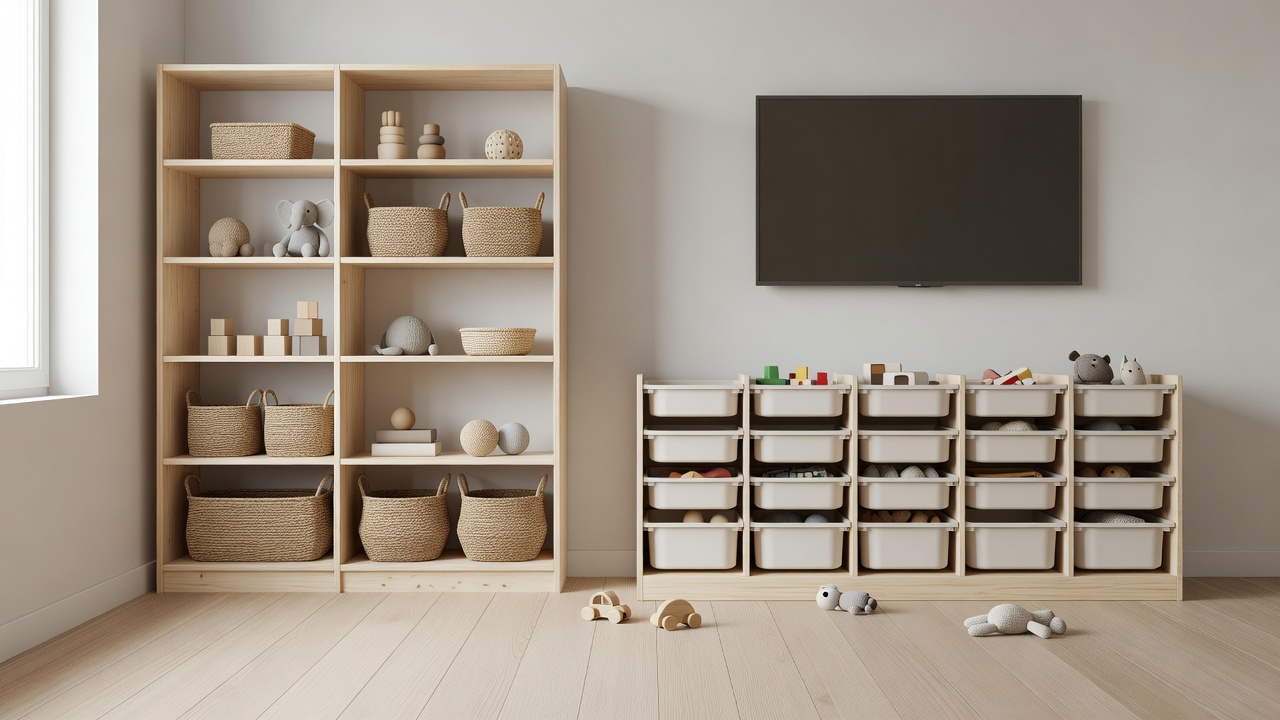
Parents often finish the day staring at a floor full of toys and wonder which storage choice will actually let them reset the space fast. Open shelves and labeled bins each have clear strengths for a 10-minute tidy. The right pick depends on your child's age, the size of the room, and how much visibility you want during play.
Key takeaways
- Open shelves let toddlers see and reach toys without help.
- Labeled bins hide clutter and speed up group cleanups.
- A hybrid setup often wins for busy families.
- Both systems work with a simple weekly rotation.
Why Storage Choice Shapes Your Daily Reset
Your storage decides how long the reset actually takes. Shelves show everything at once, so you spot stray items in seconds. Bins keep pieces together, which cuts the time spent hunting for missing parts.
You want a system that matches real evenings, not perfect photos. Test both options in one corner first before changing the whole room. Many parents notice that the wrong choice adds two or three minutes each night, which adds up over a week.
How Open Shelves Support Quick Tidying
Open shelves work when you rotate a small number of toys at a time. Everything stays visible, so your child can put items back without reminders.
Try these steps for a smooth shelf reset:
- Clear one shelf at a time.
- Group items by type before returning them.
- Keep only current favorites on lower levels.
- Move older toys to a closet bin for later rotation.
- Wipe dust from empty shelves during the same pass.
- Note which toys get ignored for the next swap.
This method keeps the play area feeling light even on busy days. It also helps you spot broken pieces right away.
Labeled Bins That Speed Up Group Cleanups
Labeled bins shine when you need every child to help at once. Clear pictures or simple words on each bin turn cleanup into a matching game.
Use this quick bin checklist:
- One bin per toy category.
- Picture labels at toddler eye level.
- Soft bins that stack without lids.
- A single overflow bin for daily extras.
- Weekly check for items that no longer fit the label.
- Keep a spare set of labels ready for new toys.
Parents who use the Apartment Play Guide: Calm Toys Without Bins often start with two bins and add more only when needed.
Toy Visibility Options Compared
Visibility affects both play and reset time. Shelves show every option, which can spark independent choices. Bins keep some toys out of sight until rotation day.
Here is a quick look at the trade-offs:
| Feature | Open Shelves | Labeled Bins |
|---|---|---|
| Toy access | Instant reach for toddlers | Requires opening and digging |
| Visual clutter | Higher during active play | Lower once items are inside |
| Reset speed | Fast spotting of stray pieces | Fast dumping into correct bin |
| Rotation ease | Simple swap on shelf | Requires emptying and refilling |
| Toddler independence | High | Medium |
| Dust buildup | Requires weekly wipe-down | Stays hidden until bin is opened |
Simple Reset Setup That Fits Ten Minutes
A workable 10-minute reset needs clear zones and few decisions. Start with one main play area and one storage wall.
Follow this numbered routine:
- Walk the room once and gather loose items.
- Return shelf toys to their spots.
- Drop bin toys into their matching containers.
- Straighten any toppled stacks.
- Check the floor one last time.
- Note any missing pieces for tomorrow.
Most families finish in under eight minutes once the system is set. Keep a small basket by the door for items that belong elsewhere.
When Open Shelves Create Calmer Toddler Spaces
Shelves reduce fights over hidden toys because children see every choice. They also make it easy to notice when a toy is no longer used.
You can pair shelves with a Seasonal Toy Rotation That Matches Weather and Mood to keep the selection fresh without extra bins. This combination often leads to calmer play and fewer requests for new toys. Follow Consumer Product Safety Commission guidelines on anchoring units to prevent tip-overs during active play.
When Labeled Bins Win for Busy Homes
Bins work best in small rooms or homes with multiple children. They contain small parts and make it simple to move toys between rooms.
Parents report success with these bin habits:
- Limit each bin to one age group.
- Empty and wipe bins during the weekly reset.
- Store seasonal bins on a high shelf.
- Swap contents instead of buying more bins.
- Label both sides so kids can match from any angle.
- Use clear bins for the youngest so they see shapes inside.
A Minimalist Toy Set vs Rotation: Which One Wins? guide shows how fewer total toys make either system easier to maintain.
Age-Based Adjustments for Storage Systems
Storage needs shift as your child moves from crawling to running. Babies under one year do best with low, open shelves that hold soft books and teethers within reach. Toddlers one to two years old still need visibility but benefit from one or two labeled bins for blocks and cars.
By age three, many children can handle deeper bins with simple word labels. Use this age checklist to adjust:
- 0–12 months: two shelves max, no bins.
- 12–24 months: add one picture-labeled bin for small parts.
- 24–36 months: two to three bins plus open top shelf.
- Review every three months and move items up or down.
These changes keep resets quick while matching new skills. Check American Academy of Pediatrics tips on childproofing storage areas for extra peace of mind.
A One-Week Test You Can Run at Home
Pick one corner and try shelves for three days, then bins for three days. Track how long each reset takes and how your child plays.
Use this comparison list during the test:
- Time spent on day-one reset.
- Number of toys left on the floor at bedtime.
- How often your toddler asks for help finding items.
- Whether the space feels calmer by day three.
- Any new fights over hidden toys.
- Ease of weekly rotation at the end.
The winner becomes your main system; the loser can handle overflow or seasonal items.
Next Steps for Your Playroom
Start with the storage style that matches your current reset time. Add a simple rotation plan next week so the system stays light.
- Measure your main play wall today.
- Choose one method and test it for seven days.
- Print a basic label set or shelf diagram.
- Review results and adjust before expanding to the rest of the room.
- Add one new rotation item from the seasonal guide.
Ready to build a full rotation system that supports either shelves or bins? Grab the parent-tested tools at Little Baby Toys.
FAQ
Do open shelves really stay tidy with toddlers?
Yes, when you keep only a small number of toys on each shelf and rotate the rest. Toddlers return items more often when they can see exactly where each piece belongs.
Are labeled bins worth the extra setup time?
The initial labeling takes about twenty minutes. After that, the daily reset speeds up because children match pictures instead of guessing.
Can I mix shelves and bins in one room?
Many families use lower shelves for open access and one or two labeled bins for small parts. This hybrid keeps visibility high while containing the messiest items.
How often should I rotate toys with either system?
A light rotation every two to three weeks works for most homes. Swap a few items at a time so the change feels natural rather than overwhelming.
Which option costs less to start?
Open shelves often cost nothing if you already own a bookcase. Bins require a small purchase but last for years and reduce the need for other organizers.