Toys for Sitting Milestones 4-7 Months: Simple Guide
8/29/2026
Toys for Sitting Milestones 4-7 Months: Simple Guide
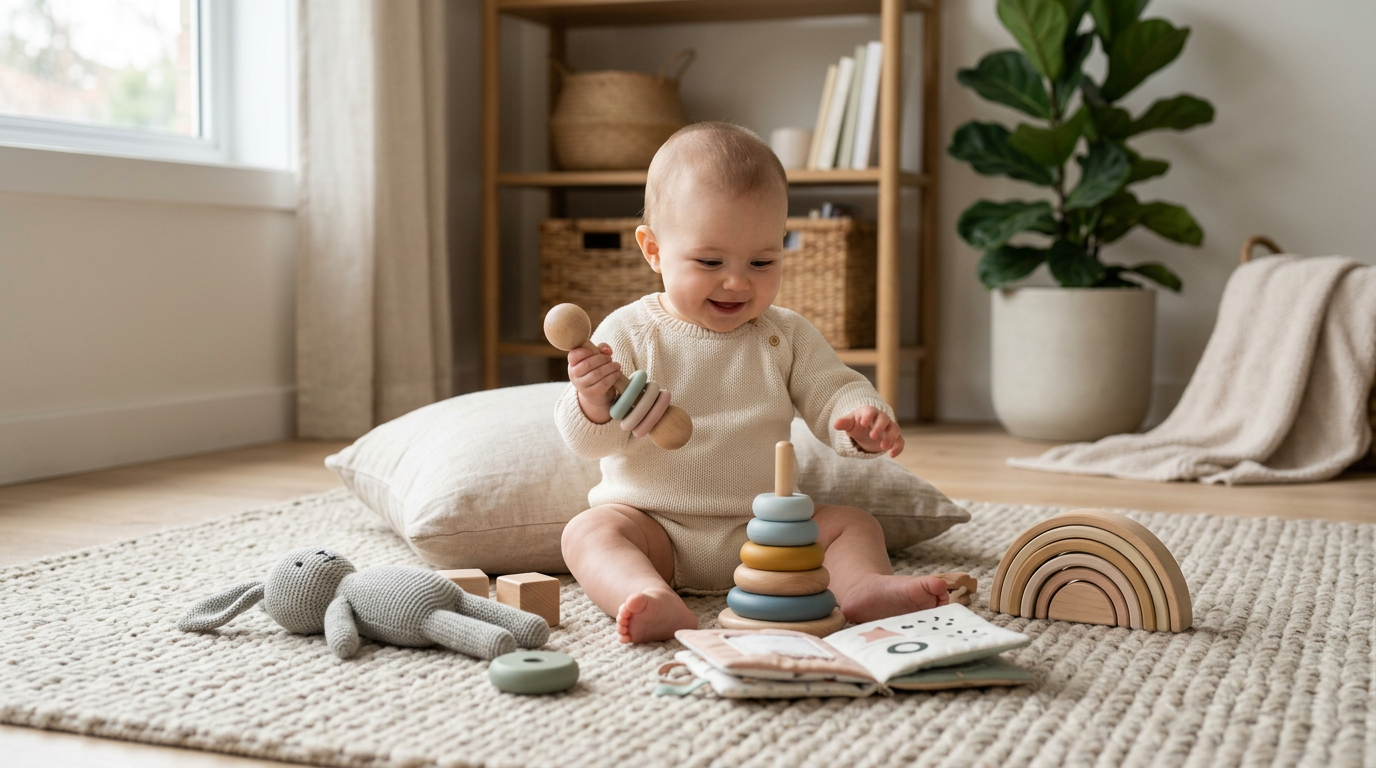
Your baby starts pushing up and testing balance around four months. By seven months many sit with little help. The right toys for sitting milestones 4-7 months give just enough support without extra clutter.
Key takeaways
- Focus on toys that reward reaching and steady sitting
- Keep the play area small and rotation simple
- Read labels once and skip anything that tips easily
What Sitting Milestones Look Like at 4-7 Months
At four months most babies prop on forearms during tummy time. By six months they sit with hands forward for support. At seven months many stay upright while turning to grab a toy. These changes happen gradually, so note small shifts each week rather than expecting sudden jumps.
Parents often see the biggest gains when play happens on a firm mat instead of a bouncy seat. Watch for these small wins each week:
- Holds head steady when pulled to sit
- Bears weight on hands while sitting
- Reaches across body without falling
- Pivots in a seated position
- Brings toy to mouth while balanced
- Looks side to side without tipping
These moments tell you when to add a new toy and when to wait. Track them in a simple notebook so you spot patterns fast.
Safer Toy Choices: Read the Label First
Check the package for age markings and material notes before you bring anything home. Baby toy safety labels explained in five minutes shows exactly what the symbols mean. Always verify the item meets current standards from the Consumer Product Safety Commission before first use.
Quick label checklist:
- Look for ASTM or CPSC marks
- Confirm no small parts that detach
- Choose firm foam or wood over soft vinyl
- Skip anything with cords or elastic bands longer than 12 inches (ASTM F963, the mandatory US toy safety standard under 16 CFR part 1250)
- Check for lead-free paint claims
- Avoid toys with batteries if possible at this age
One five-minute check now saves daily worry later. For full details on toy safety rules visit the official CPSC toy safety page.
Developmental Picks for 4-5 Months
Babies at this stage still need some floor support. Choose items that let them practice balance while lying or propped. A low tray or wedge can help without locking them into one position all day.
Try these first options:
- Soft stacking rings on a low tray
- Crinkle books that stay flat
- Mirror on a stable base
- Small rattle with easy grip
- Textured teether that stays nearby
Place one or two within arm reach during supervised floor time. Rotate the set every two days so interest stays high without adding more items.
What Works at 6-7 Months
Once sitting feels steadier, add toys that encourage leaning and turning. This builds core strength for the next stage. Many parents notice babies prefer items they can manipulate with both hands while seated.
Good fits include:
- Nesting cups for banging and stacking
- Soft blocks that stand upright
- Cause-and-effect toys with buttons
- Rolling balls that stay close
- Simple shape sorters with large pieces
First crawling toys 6-9 months simple setup guide shares how to keep these same items useful past seven months. The key is choosing pieces that do not roll too far away.
Matching Toys to Daily Routines
Tie toy time to regular moments like after meals or before naps. Short sessions of ten minutes work better than long unstructured play. This approach prevents fatigue and keeps the focus on balance practice.
Sample daily flow:
- Morning: propped mirror and rattle on mat
- Midday: stacking rings during supervised sitting
- Afternoon: soft book while baby leans forward
- Evening: rolling ball for gentle pivot practice
Adjust based on your baby's energy. Some days they need more support props, other days less.
Comparison: Toy Types at This Stage
| Toy Type | Support Level | Best For | What to Watch |
|---|---|---|---|
| Soft blocks | Low | Reaching practice | Count pieces weekly |
| Stacking rings | Medium | Balance and grasp | Base must stay flat |
| Cause-effect buttons | Medium | Sitting endurance | Volume stays low |
| Rolling balls | Low | Tracking and pivot | Choose larger sizes |
| Nesting cups | Medium | Two-hand coordination | Smooth edges only |
What to Skip Right Now
Some popular items add clutter without helping the milestone. They often require skills your baby has not reached yet.
Leave these on the shelf:
- Walkers or activity centers
- Toys that require standing
- Anything with flashing lights only
- Oversized plush that tips over
- Sets with more than six small pieces
- Battery toys that move on their own
- Hanging mobiles meant for cribs
Sensory toys vs skill toys what actually matters explains why simple often beats busy designs. The Centers for Disease Control and Prevention also notes that milestone support comes from consistent floor play rather than complex gear.
Setting Up a Calm Play Corner
A small mat and one low shelf keep the space tidy. Rotate three to four toys every few days so nothing feels overwhelming. Keep the corner near a window for natural light but away from high traffic areas.
Weekly reset steps:
- Clear the mat each evening
- Wipe toys with a damp cloth
- Return two items to storage
- Add one fresh toy the next morning
- Check for loose parts
- Note which toy held attention longest
Weekly playroom reset checklist for 10-minute calm gives the exact 10-minute routine. This system works even when you only have fifteen minutes between other tasks.
Printable Checklist for Sitting Stage
Print this list and tape it near the play mat:
- One support toy (rings or blocks)
- One cause-effect item
- One soft book
- One rolling toy
- Mat wiped today
- Toys rotated this week
- Session length noted
- Any new balance observed
Check off each line at the end of the day. The habit takes less than two minutes and builds a record you can share with your pediatrician.
Tracking Progress Without Extra Gear
You do not need apps or special journals. A simple dated note on your phone works. Record the date your baby first sat unassisted for thirty seconds or reached sideways without falling. These notes help you decide when to introduce the next toy level.
Common progress markers parents notice:
- Baby sits longer during morning play
- Reaches for toys while turning torso
- Recovers balance after small lean
- Shows frustration when toy rolls out of reach
Compare notes week to week instead of day to day. Small consistent gains matter more than dramatic jumps.
Next Steps for Your Family
Start with the toys already in your home and test one new item this week. Track what your baby reaches for most often. Adjust the corner based on that simple feedback.
- Download the matching PDF guide for your exact stage
- Print the checklist tonight
- Set a seven-day rotation reminder
- Share the setup photo with another parent
- Note one balance win each evening
Which PDF play guide fits your family right now helps you pick the right one without extra browsing.
FAQ
How many toys should sit out at once?
Three to four items keep the space calm and let your baby focus on sitting balance.
Can I use the same toys after seven months?
Yes. Many of these picks grow with your child when you rotate them into later stages.
What if my baby skips sitting and moves straight to crawling?
Every child follows their own timeline. Keep floor toys low and supportive either way.
Do I need special seating gear?
A simple floor mat works better than extra seats. It lets your baby practice natural balance.
Where can I find parent-tested checklists?
Our instant download guides include the exact lists we use at home, reviewed with pediatric input.