Sensory Toys vs Skill Toys: What Actually Matters
8/29/2026
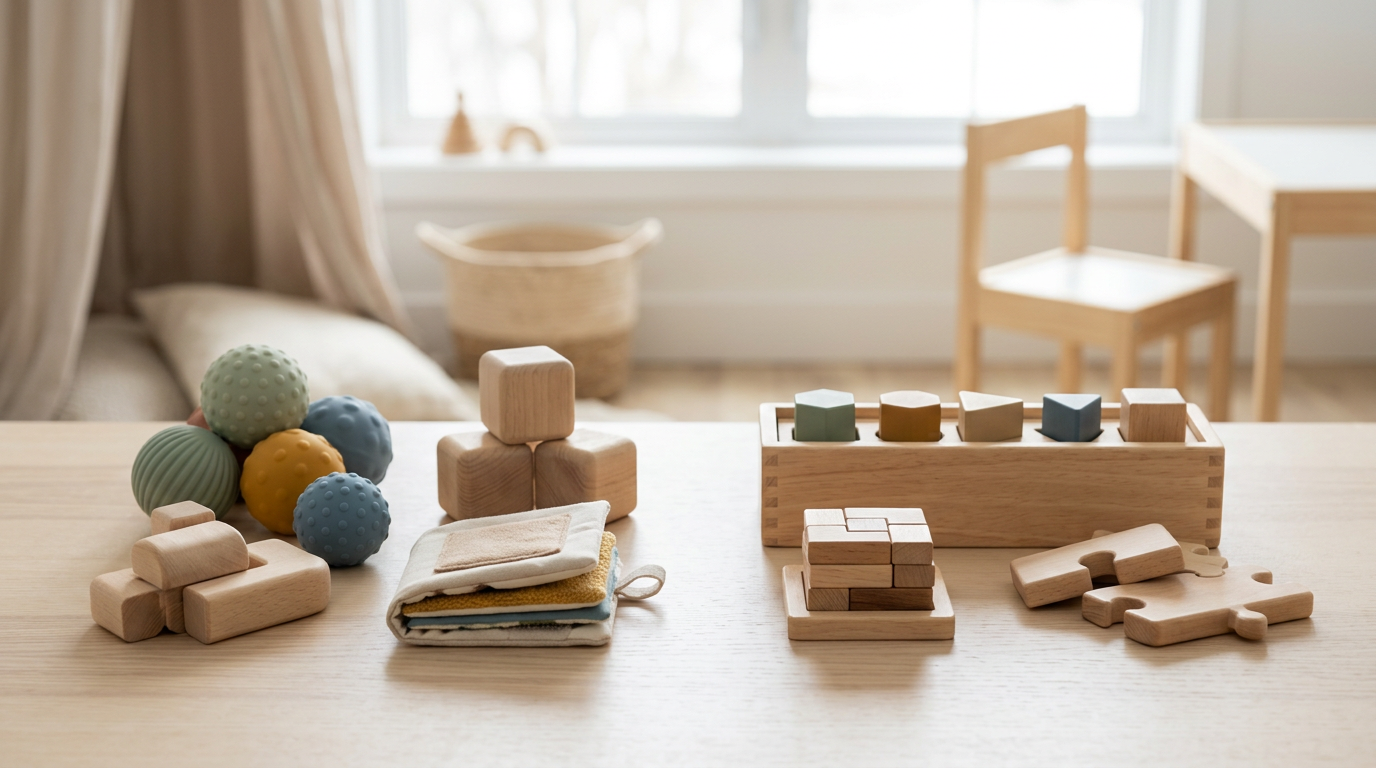
Sensory Toys vs Skill Toys: What Actually Matters
Parents often wonder if a toy that lights up and vibrates does more for their child than a simple wooden block. The truth is both types can fit into your routine when you match them to your child's stage and keep the play area tidy.
You do not need every flashy option on the shelf. Focus on safer toy choices that match age appropriate picks and support calmer playroom setups instead.
Key takeaways
- Sensory toys calm the senses while skill toys build specific abilities
- Both work best when they match your child's current milestones
- A rotation system keeps either type from overwhelming the space
- Always check labels for age and safety before bringing anything home
When Sensory Toys Help Most
Sensory toys give babies and toddlers input through touch, sound, or sight. They can settle a fussy child or encourage reaching and grasping. A four-month-old who grabs a soft rattle often calms faster than with a silent toy because the gentle sound matches their developing hearing.
Use them in short bursts, especially during the 0-6 month window when babies explore with their mouths and hands. Overuse can lead to overstimulation, so watch for signs like turning away or fussing after ten minutes.
- Soft rattles with gentle sounds
- Textured fabric squares
- Crinkle books
- Smooth wooden teethers
- Light-up cause-and-effect balls (used sparingly)
- Fabric books with different fabric weights
- Simple shakers filled with safe pellets
Skill-Building Toys That Match Milestones
Skill toys target movement, problem solving, or language. They often look simpler but keep a child engaged longer because the child controls the outcome. A nine-month-old stacking two cups practices both hand control and cause and effect at once.
Look for items that grow with your child rather than single-use gadgets. Trade-offs appear here: a shape sorter may frustrate a ten-month-old but delight the same child at fourteen months.
- Stacking cups for 6-9 months
- Shape sorters around 12 months
- Simple puzzles for 18-24 months
- Push toys that encourage walking
- Nesting blocks that teach size order
- Wooden vehicles for pushing and lining up
- Board books with tabs for turning pages
Sensory Toys vs Skill Toys Side by Side
| Aspect | Sensory Toys | Skill Toys |
|---|---|---|
| Focus | Calming input through senses | Building motor or thinking skills |
| Best age range | 0-12 months for most | 9-36 months depending on task |
| Clutter risk | Can multiply fast if battery powered | Usually fewer pieces but need storage |
| Play time | Short, 5-10 minutes | Longer, 15-20 minutes |
| Safety check | Check volume and small parts | Check for sharp edges and stability |
What to Skip in Both Categories
Some toys promise the world but add noise and mess without real benefit. Battery-powered items that make random sounds often end up ignored after the first week while still taking up space.
- Toys labeled for a wide age range that feel too advanced
- Items with tiny pieces that scatter easily
- Battery toys that make random sounds all day
- Plastic sets with parts that break after one week
- Anything without clear age guidelines on the label
- Oversized plush that cannot fit in rotation bins
Check the CPSC toy safety guidelines before you buy so you can spot hazards quickly. You can also review baby toy safety labels explained in five minutes for quick steps you can use at the store.
Age Appropriate Picks by Stage
Choosing the right toy at the right time keeps play purposeful and the floor clearer. Match the toy to the milestone rather than the marketing claim.
For 0-6 months focus on grasp and calm sounds. For 9-12 months add cause and effect. Toddlers at 18-24 months need items that invite pretend play or fine motor work. Track progress against the CDC developmental milestones so you know when to swap items out.
See toys for 12 month milestones age appropriate picks for a stage-by-stage list.
Balancing Sensory and Skill Toys Without Extra Bins
You can keep both types without doubling the clutter by pairing them intentionally. Place one sensory item next to a skill toy so your child moves between calming and building in the same session.
This approach works because the sensory toy resets attention while the skill toy extends focus. Parents who try this report fewer meltdowns during playtime.
- Pair a textured ball with stacking cups
- Keep a soft book beside shape sorters
- Use one low basket for morning sensory play and one for afternoon skill work
- Swap the pair every two days instead of every week
- Store the rest out of sight so only the current pair stays visible
Setting Up a Calmer Playroom
A calm system starts with zones instead of one big bin. Keep sensory toys in one low basket and skill toys in another. This physical separation helps you rotate faster and teaches your child where items belong.
Rotate every week so only a handful stay out. This simple habit cuts daily cleanup time in half. A nine-month play station works especially well when you limit the zone to six items total.
Try the weekly playroom reset checklist for 10-minute calm to build the habit. You can also look at 9 month play station setup without extra bins for zone ideas that use furniture you already own.
Using a Toy Rotation Method
Rotation keeps both sensory and skill toys fresh without buying more. The method prevents the common problem of toys losing interest after three days.
- Sort current toys into three groups
- Keep one group out and store the rest
- Swap groups every seven days
- Add only one new item per swap
- Label bins so everyone in the house knows the system
- Review each group monthly and remove anything broken
The toy rotation method for toddlers that cuts daily mess gives you printable labels to start today. Compare it with toy rotation vs daily cleanup which calm system wins if you are deciding between full rotation and quick daily resets.
Printable Checklist for Your Next Toy Purchase
Before you buy, run through these quick checks. The list takes less than two minutes and prevents most clutter mistakes.
- Does the label match your child's age?
- Can you store it in one small bin?
- Does it support a skill or sense without extra noise?
- Will it last longer than a month?
- Does it fit your current rotation groups?
- Can it pair with an existing toy you already own?
Your Next Step
Pick one sensory toy and one skill toy that match your child's stage this week. Add both to your rotation and notice how the play space feels after seven days.
- Test the pair for three days and note how long your child stays engaged
- Adjust the rotation if one toy gets ignored
- Add the next pair only after the first week succeeds
- Download the guide that matches your months for a full printable plan
If you want a ready-made plan, the guide which PDF play guide fits your family right now walks you through the exact setup for your months. You can also explore best PDF guide for toddlers 18-month playroom setup when your child reaches that stage.
FAQ
Do sensory toys count as skill toys too?
Many do both. A textured ball can calm and also help with grasping. The line is not strict, so focus on what your child actually uses.
How many toys should stay out at once?
Six to eight items total works for most toddlers. Anything more usually ends up on the floor unused.
Are wooden toys always safer than plastic?
Not always. Check for smooth finishes and no small parts regardless of material. How wooden toys for baby grip build strength safely shows what to look for.
Can I mix sensory and skill toys in the same bin?
You can, but separate bins make rotation easier and keep the play area calmer.
What if my child ignores the skill toys?
Try a shorter play session or pair the toy with a familiar sensory item. Interest often grows after a few rotations.