Toys for 12 Month Milestones: Age Appropriate Picks
8/29/2026
Toys for 12 Month Milestones: Age Appropriate Picks
Parents often stand in the toy aisle wondering what actually helps a one-year-old move forward. The right toys for 12 month milestones match the skills your child is building right now, like pulling up, pointing, and exploring with both hands.
We keep it simple: read the label, match the stage, and rotate what stays out. Here are the key takeaways before we dive in.
- Match toys to current milestones instead of age labels alone
- Focus on wooden or sturdy options that build grip and balance
- Use a rotation system to cut daily mess
- Skip anything with small parts or loud sounds
- Print a quick checklist so choices stay consistent
What 12-Month Milestones Actually Look Like
At twelve months most babies pull to stand, cruise along furniture, and point at things they want. They also start to stack one or two blocks and enjoy putting objects in and out of containers.
These skills grow best with toys that invite movement and simple cause-and-effect play. Watch your child for a week and note which actions they repeat; that tells you what to offer next. The official CDC one-year milestones chart lists the same movement and communication markers we see in daily play.
Stage by Stage Developmental Play at Twelve Months
Developmental play at this exact stage builds on emerging independence. Early in the month you may notice more cruising and less crawling. By the end many babies attempt a few independent steps while holding a toy.
Offer activities that layer one skill onto another. For instance, a child who cruises well can practice carrying a soft block while moving. This stage by stage approach prevents boredom and supports steady progress without extra purchases.
Try these layered ideas during short play sessions:
- Cruise along a low couch while pushing a ball
- Point at pictures in a board book then stack one ring
- Drop items into a basket then pull them back out
- Stand at a low table and turn thick book pages
- Imitate simple sounds while rolling a car
Each session lasts five to ten minutes and ends when interest fades.
Age Appropriate Toys for Gross Motor Skills
Gross motor play at this stage needs space to practice standing and stepping. Choose items that stay low to the ground so falls stay safe.
- Push toys with a wide base for cruising
- Soft blocks for stacking while kneeling
- Low tunnels or crawl-through boxes
- Balls that roll slowly instead of fast
- Stable ride-on toys without pedals yet
These five options keep play active without needing a big room. If your child tires quickly, shorten sessions and add a soft mat for kneeling breaks.
Age Appropriate Toys for Fine Motor and Grip
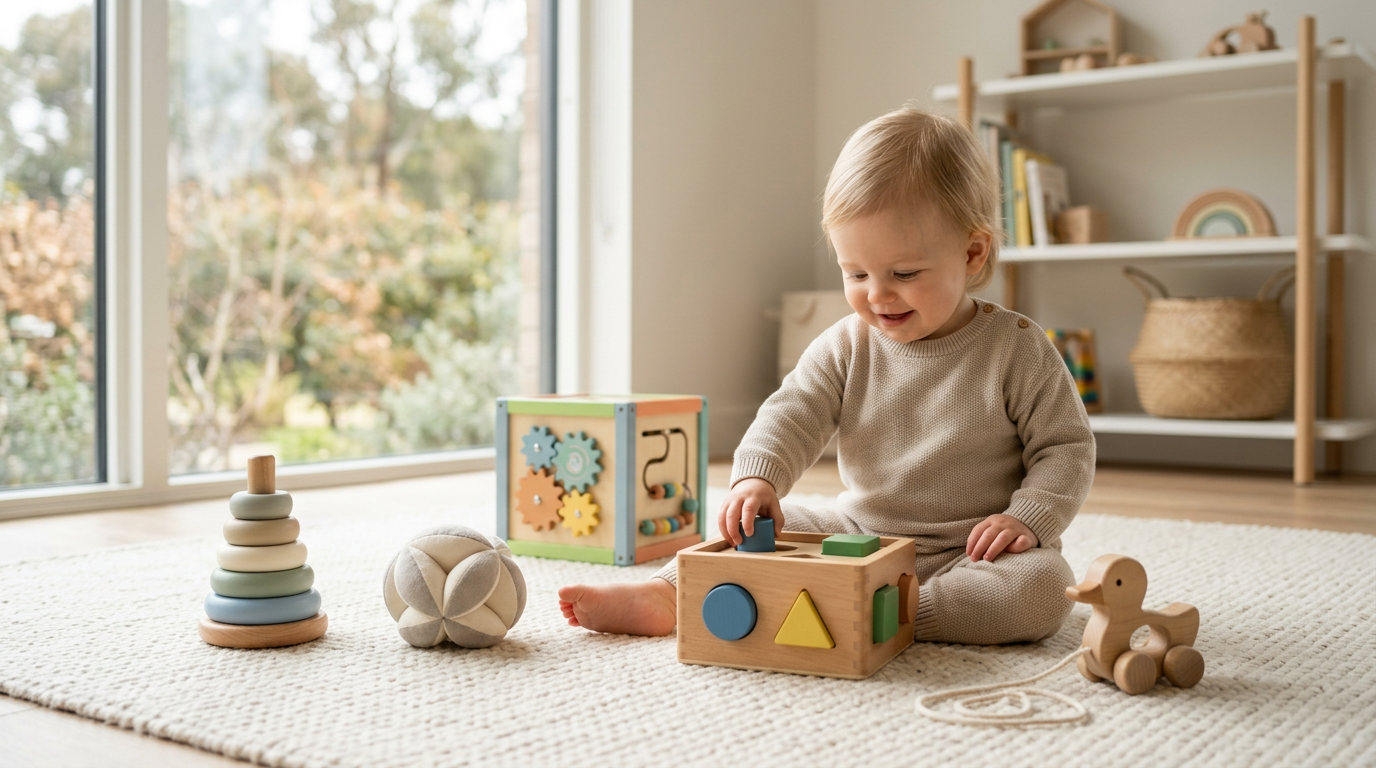
Fine motor work happens when little hands pick up, drop, and fit pieces. Wooden toys for baby grip build strength safely because the shapes stay simple and the weight feels natural.
Try these during floor time:
- Stacking rings with a thick post
- Shape sorters with only two or three pieces
- Nesting cups that fit inside each other
- Board books with thick pages to turn
- Large peg boards with easy-to-grab pegs
Rotate two of these at a time so attention stays fresh. Some families notice better focus when the toy matches the child's current reach and grasp rather than future skills.
How to Read Safety Labels in Under Five Minutes
Labels tell you quickly whether a toy fits your child. Look for the ASTM F963 mark and the age recommendation on the package. Baby toy safety labels explained in five minutes walks through the exact steps we use at home.
Check these four points every time:
- No small parts that fit through a toilet-paper roll
- No strings longer than six inches
- Materials listed as BPA-free or non-toxic
- Edges rounded, not sharp
Follow the CPSC guidelines on choosing safe toys for the same checks we repeat at every store visit.
Printable Checklist for Toy Selection
Print this list and keep it on your phone or fridge. It takes two minutes per toy and prevents most returns.
- Does it match a current milestone?
- Can it be wiped clean easily?
- Is it free of small detachable parts?
- Does it store in one bin or on one shelf?
- Will it still interest your child in two months?
- Have you seen it used safely by other one-year-olds?
Check off at least four before you buy.
Toy Rotation Method That Keeps Play Calm
A simple toy rotation method for toddlers cuts daily mess and keeps interest high. Toy rotation method for toddlers that cuts daily mess shows the exact zone planning we follow.
Follow these steps each Sunday evening:
- Gather three bins labeled A, B, and C
- Keep six to eight toys out in bin A
- Store the rest in bins B and C
- Swap bins every seven days
- Wipe everything during the swap
You end up with fewer toys visible and more floor space. Edge cases like teething babies benefit from swapping in extra chew-safe items during the weekly reset.
Toy Rotation vs Daily Cleanup Comparison
Parents often ask whether rotation beats daily pickup. Here is a quick side-by-side look.
| System | Time per day | Clutter level | Child interest | Parent stress |
|---|---|---|---|---|
| Daily full cleanup | 15-20 min | High | Drops fast | High |
| Weekly rotation | 10 min | Low | Stays steady | Low |
| No system at all | 5 min | Very high | Overwhelmed | Very high |
Rotation wins for most families with one-year-olds because it reduces decision fatigue while keeping the play space open.
Safer Toy Choices When You Shop
We shop with the same four rules every time. How wooden toys for baby grip build strength safely explains why natural materials often beat plastic for this age.
- Choose solid wood or thick fabric first
- Test weight in your own hand before buying
- Skip battery toys until after 18 months
- Look for toys made in small batches when possible
These choices support Little Toys, Real Joy without adding extra items you will store later. Cross-check any new purchase against the AAP toy safety recommendations for added peace of mind.
Planning Ahead for the Next Stage
Your child will soon move into 18-month play. Best PDF guide for toddlers: 18-month playroom setup gives the exact next checklist so you can prepare early.
Keep the same rotation bins and simply swap in new items as milestones shift. That keeps the play space feeling light all year.
Key Takeaways
- Toys for 12 month milestones work best when they match standing, pointing, and simple stacking
- A printable checklist and weekly rotation keep choices calm and spaces tidy
- Wooden and sturdy options build grip safely without extra noise
Next Steps
- Print the checklist above and tape it near your toy shelf
- Pick three age appropriate toys to rotate this week
- Swap bins every Sunday for the next month and note what holds interest
- Visit Little Baby Toys for the full set of stage-by-stage PDFs when you want the complete system
FAQ
What are the top toys for 12 month milestones?
Push toys, stacking rings, and shape sorters with two or three pieces top the list because they match pulling up and early fine motor work.
How many toys should stay out at once?
Six to eight toys keep play focused. Rotate the rest weekly so the room stays calmer and interest lasts longer.
Are wooden toys better than plastic at this age?
Wooden toys for baby grip often feel better in small hands and need fewer batteries. They also wipe clean quickly and last through multiple children.
Where can I find a printable checklist?
The checklist in this guide covers safety and milestone fit. Download any of our parent-tested PDFs for extra copies you can print and reuse.
When should I move to 18-month toys?
Watch for steady walking and interest in pretend play. Most families add the next set around 15 to 18 months while keeping the same rotation bins.